

The Treasure Route in Touraine — around Loches
Between the ZooParc de Beauval and the royal town of Loches, the Treasure Route links places where works of art, architecture and landscapes remain quietly perceptible.
The ZooParc de Beauval is often a starting point. But the question soon appears: what else can be discovered nearby, and where can one stay in order to truly inhabit this part of Touraine?
Close by, other places emerge — older, more discreet — extending the visit without changing its spirit. The Treasure Route links them together and offers another reading of the stay, beyond a single destination.
The Treasure Route is not a list of places to see. It opens another way of crossing Touraine, more discreet, more inward, where works of art, architecture and landscapes answer one another.
Where some itineraries gather the most famous places, this route attends to what connects them, to what sometimes remains withdrawn, yet deeply present.
It does not replace the must-sees in the Loire Valley — it extends them differently, through a slower and more attentive relationship with the territory.
From La Corroirie, Loches can be reached in about twelve minutes, while the ZooParc de Beauval lies about twenty-five minutes away. This proximity gives the territory a particular continuity, where places remain linked without rupture.
A route of treasures
The Treasure Route was created in 2008 as an association, to connect several nearby places and offer a shared reading of them.
In Loches, certain works take their place within the density of the royal town. In the church of Saint-Antoine, two canvases linked with Caravaggio regained their presence after having remained almost invisible for a long time.
Their story did not begin there. They belonged to Philippe de Béthune, ambassador in Rome from 1601 to 1605, before being entrusted to the Carthusian monks of the Liget, whose estate management depended on La Corroirie. After the French Revolution, from 1789 onwards, they were moved to Loches, where they were kept for nearly two centuries before their rediscovery.
Other treasures appear elsewhere: in Beaulieu-lès-Loches, in Montrésor, in Nouans-les-Fontaines, or at La Corroirie itself. Churches, collegiate churches, chapels and interiors preserve works that take on their meaning when placed back within their context.
The Château de Chenonceau belongs to this wider geography. Its presence is more visible, but it does not sum up the territory.
These works cannot be read in isolation. They bear witness to older circulations — between monasteries, private collections and places of power — giving the territory a discreet coherence. See practical information
To these traces one may add another presence, more diffuse: landscapes, ponds, forests, birds and calm waters. Biodiversity is also part of these treasures, less visible perhaps, but essential.
Following the route
Following this route does not mean chaining visits together. It means allowing correspondences to appear between places. A work, a space, an architecture, then a landscape gradually compose a reading of the territory.
On foot, by bicycle or on horseback, distances change. Transitions become perceptible, and the route is no longer only a line on a map, but what links one place to another.


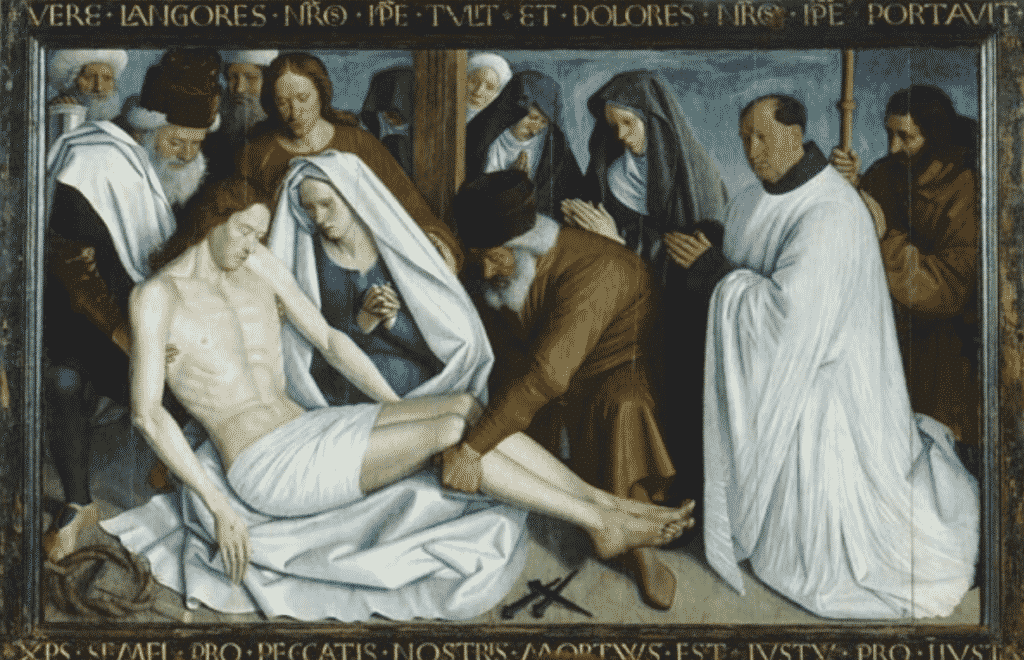
Between Beauval and Loches, the Treasure Route
The Treasure Route does not simply connect places. It stretches between two poles — the ZooParc de Beauval and the royal town of Loches — and is discovered in what lies between them.
It does not offer a route to follow, but a way of moving forward. Some places leave a clear mark, others remain quieter. Together, they compose a slower reading of Touraine.
Where the must-sees in the Loire Valley draw an immediate geography, this route attends to what appears between the points — in the intervals, transitions and returns.

Beauval — a threshold
The ZooParc de Beauval is often an entrance. Its presence is immediate. It marks the beginning of a route, but also calls for a shift: what remains when one moves away from it?
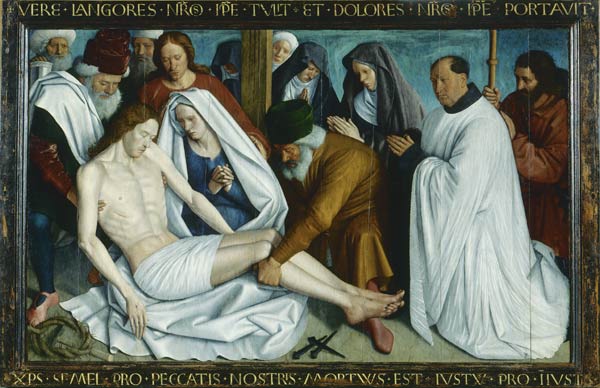
Nouans-les-Fontaines — first presences
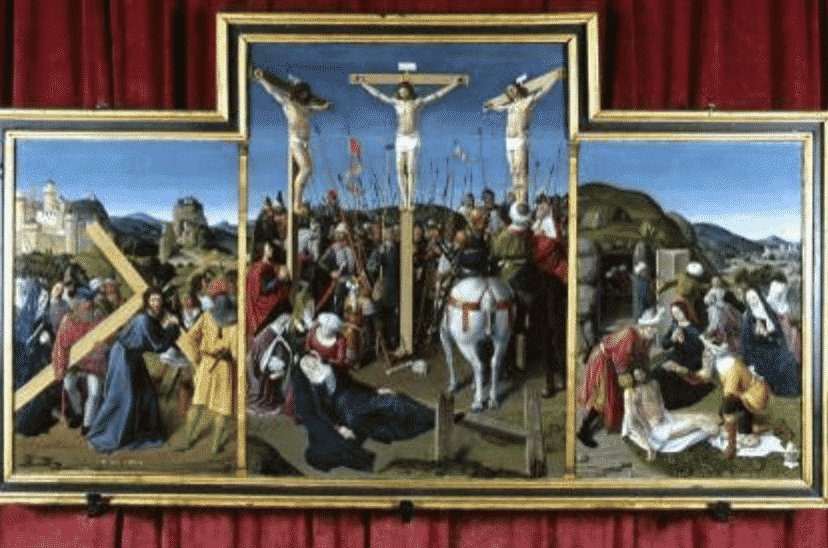
A few kilometres away, a 15th-century Pietà associated with Jean Fouquet appears in a discreet place. Nothing announces it. It belongs to this territory that does not reveal itself at once.
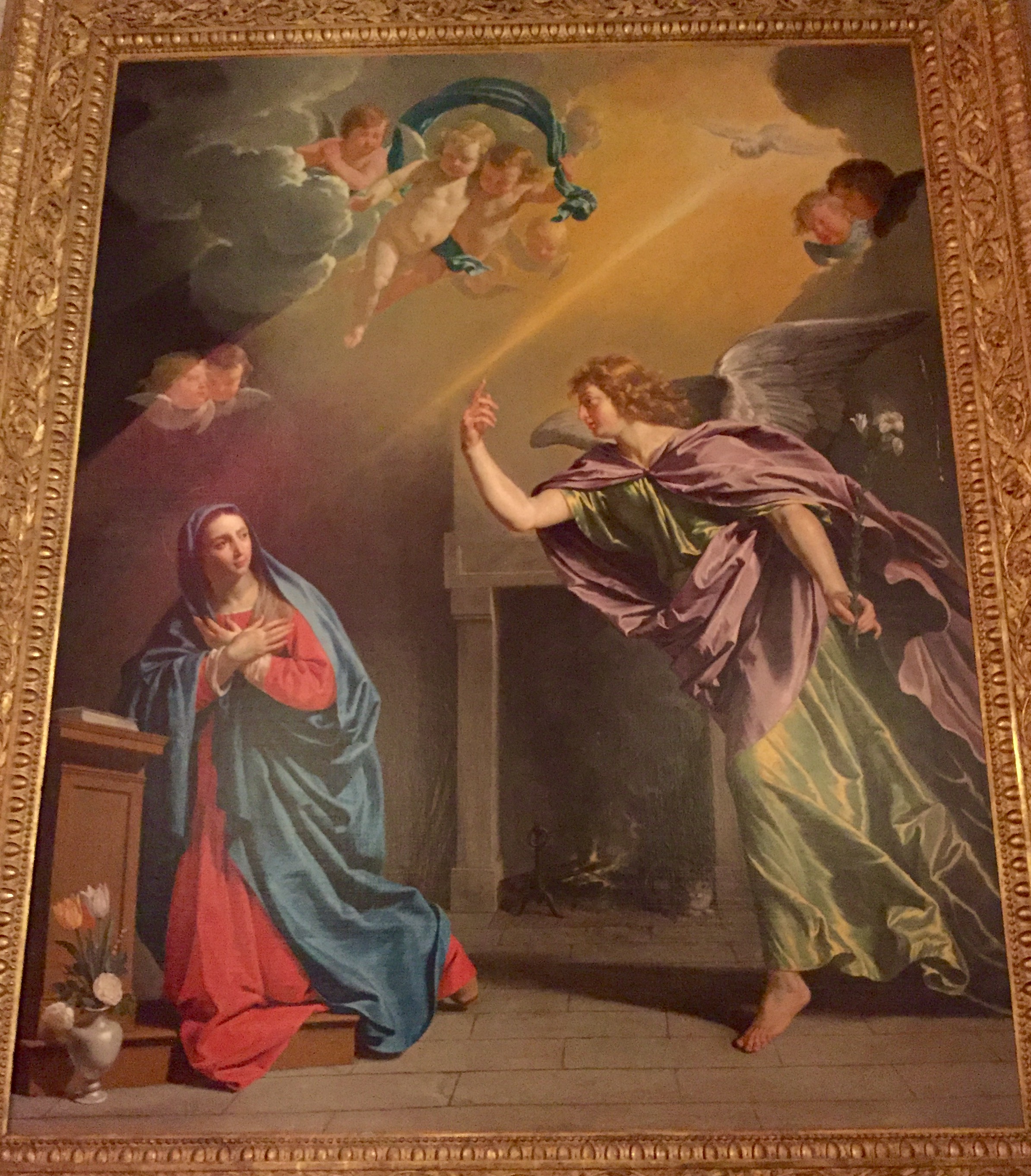
Montrésor — the collegiate church
In the collegiate church of Saint-Jean-Baptiste, the Annunciation by Philippe de Champaigne does not stand apart. It remains bound to the place, to the light, to what continues.
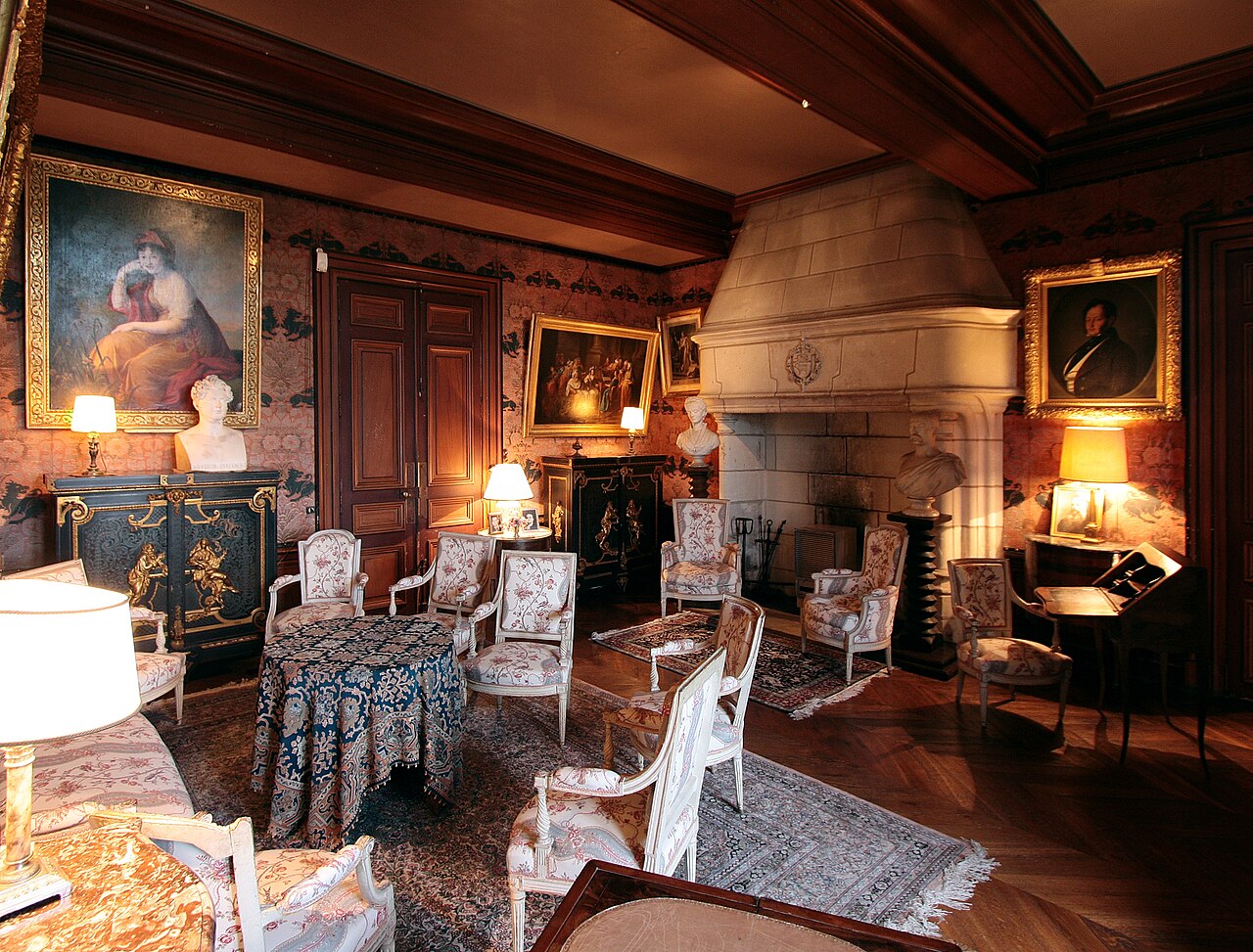
Montrésor — the château
The château continues this presence. Objects, rooms and collections compose an interior that still feels inhabited, where time does not break off.
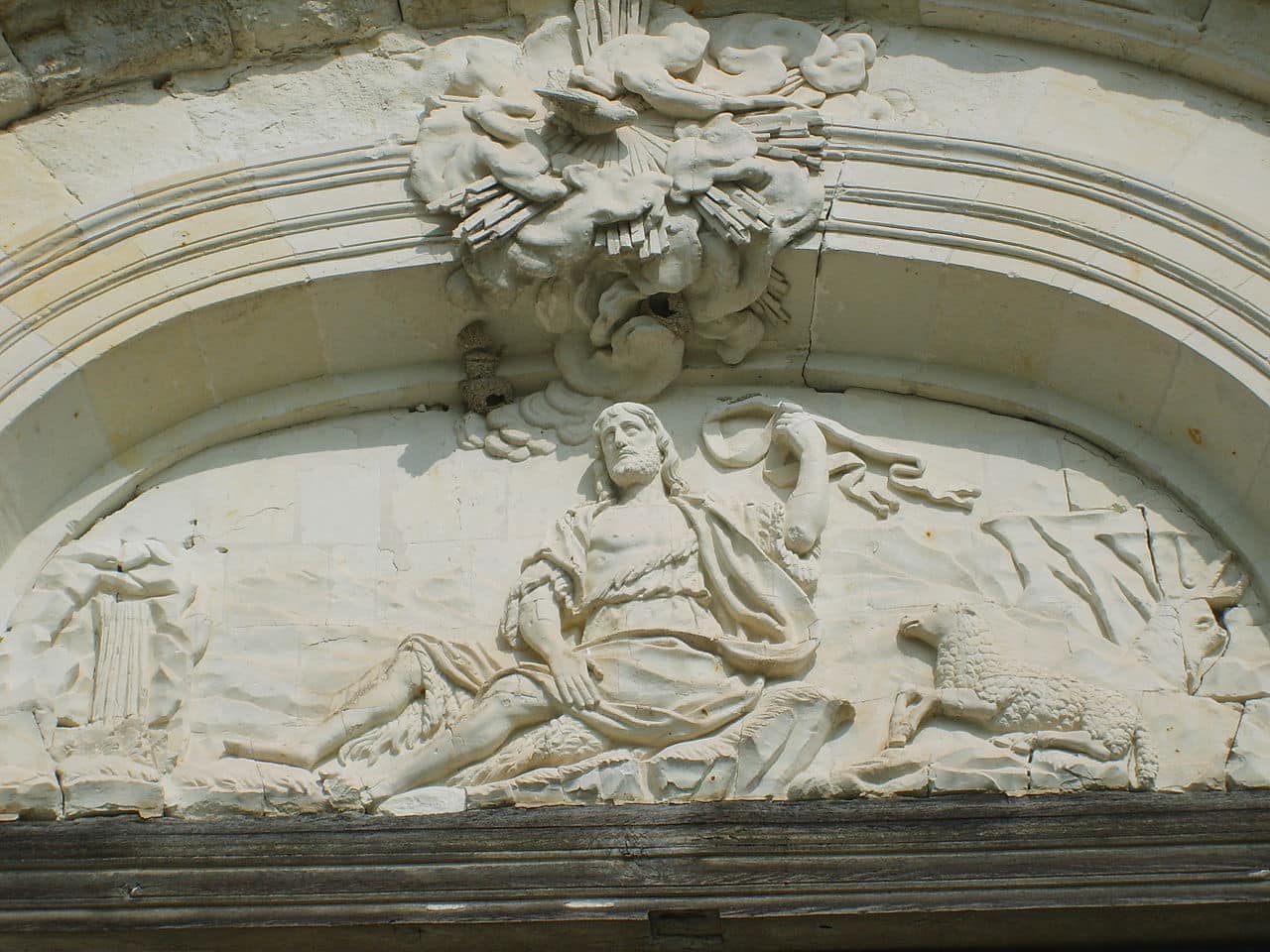
The Liget — monastic continuity
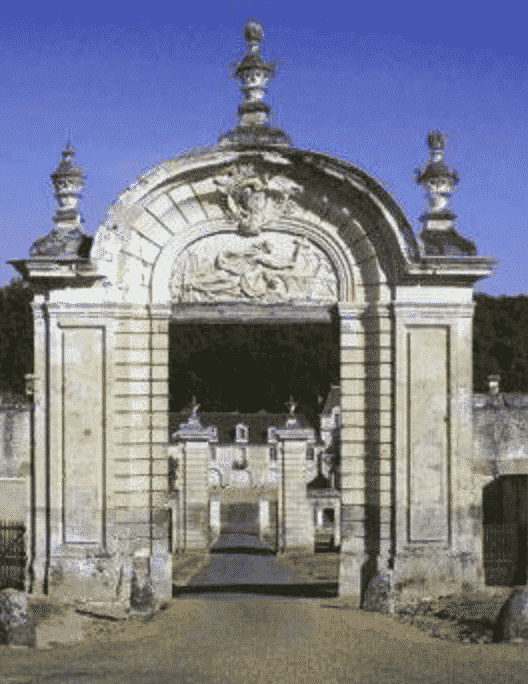
The Chartreuse du Liget recalls the organisation to which La Corroirie belonged. Frescoes, stone and forest compose an ensemble where time holds without rupture.
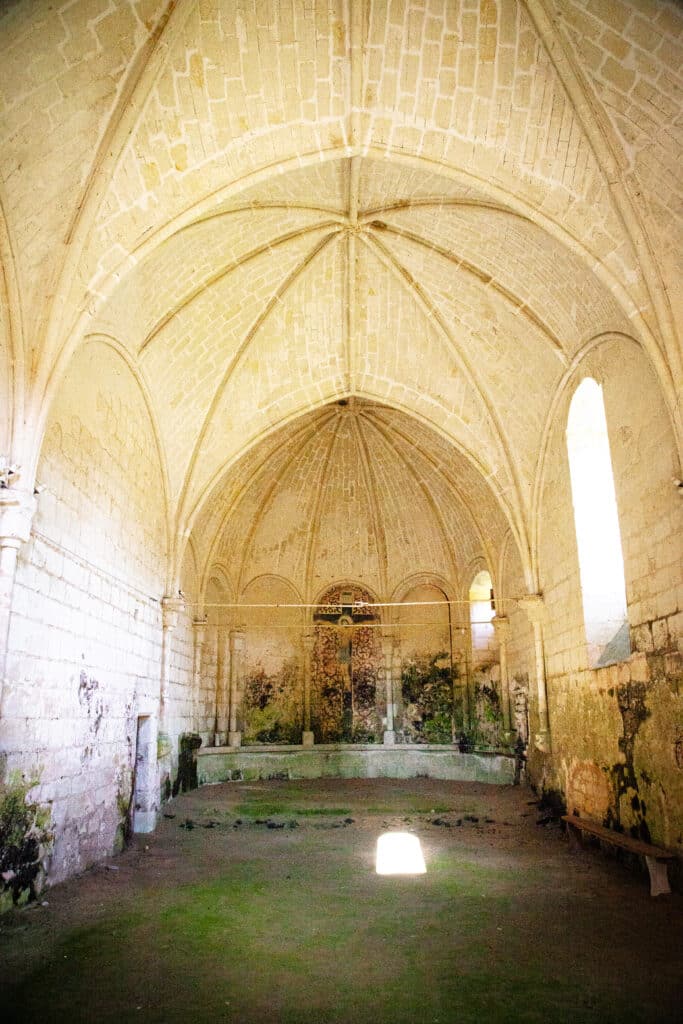
La Corroirie — a place that connects
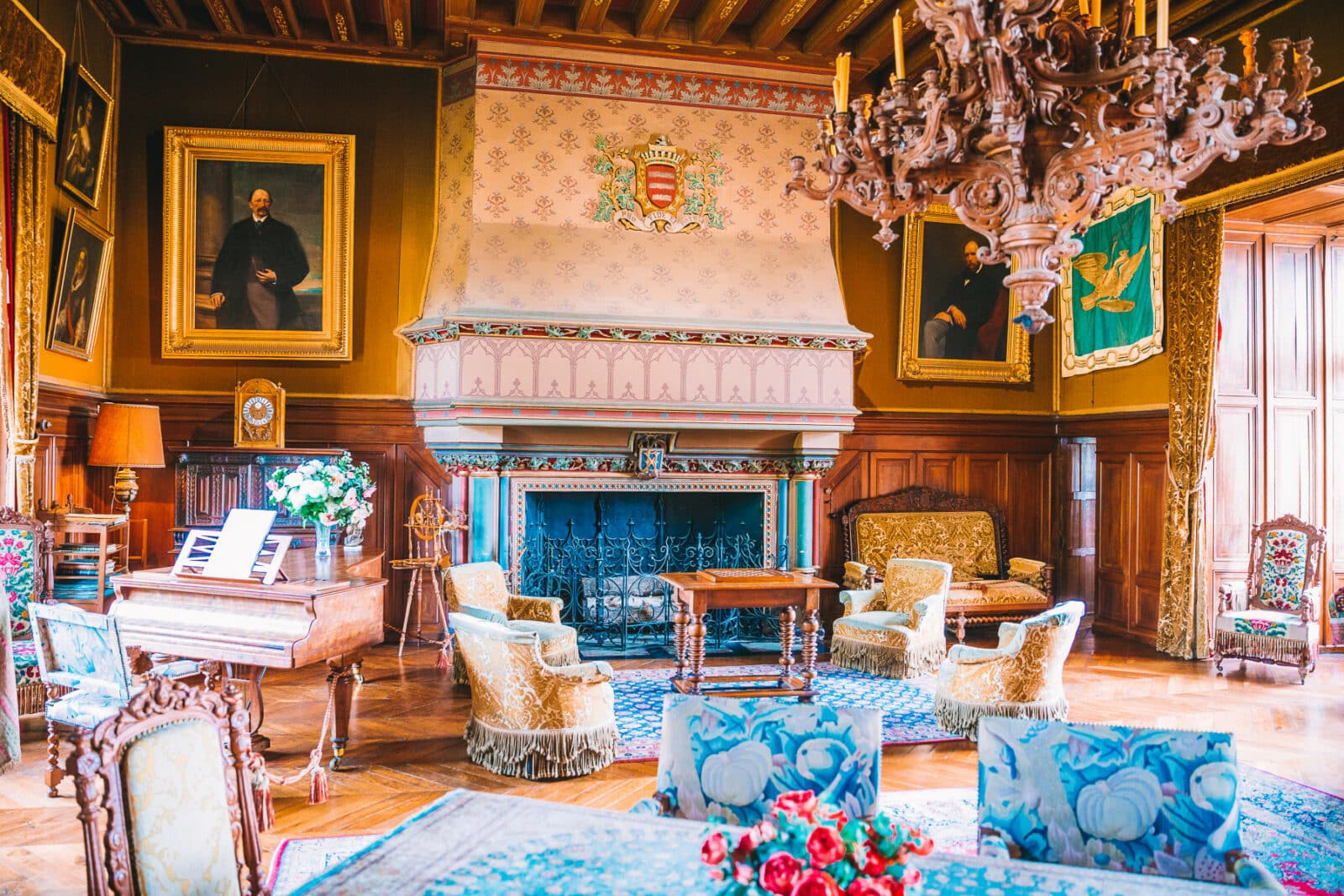
Between these places, La Corroirie does not add another visit. It allows them to be linked. Buildings, water and silence give shape to what has been crossed.
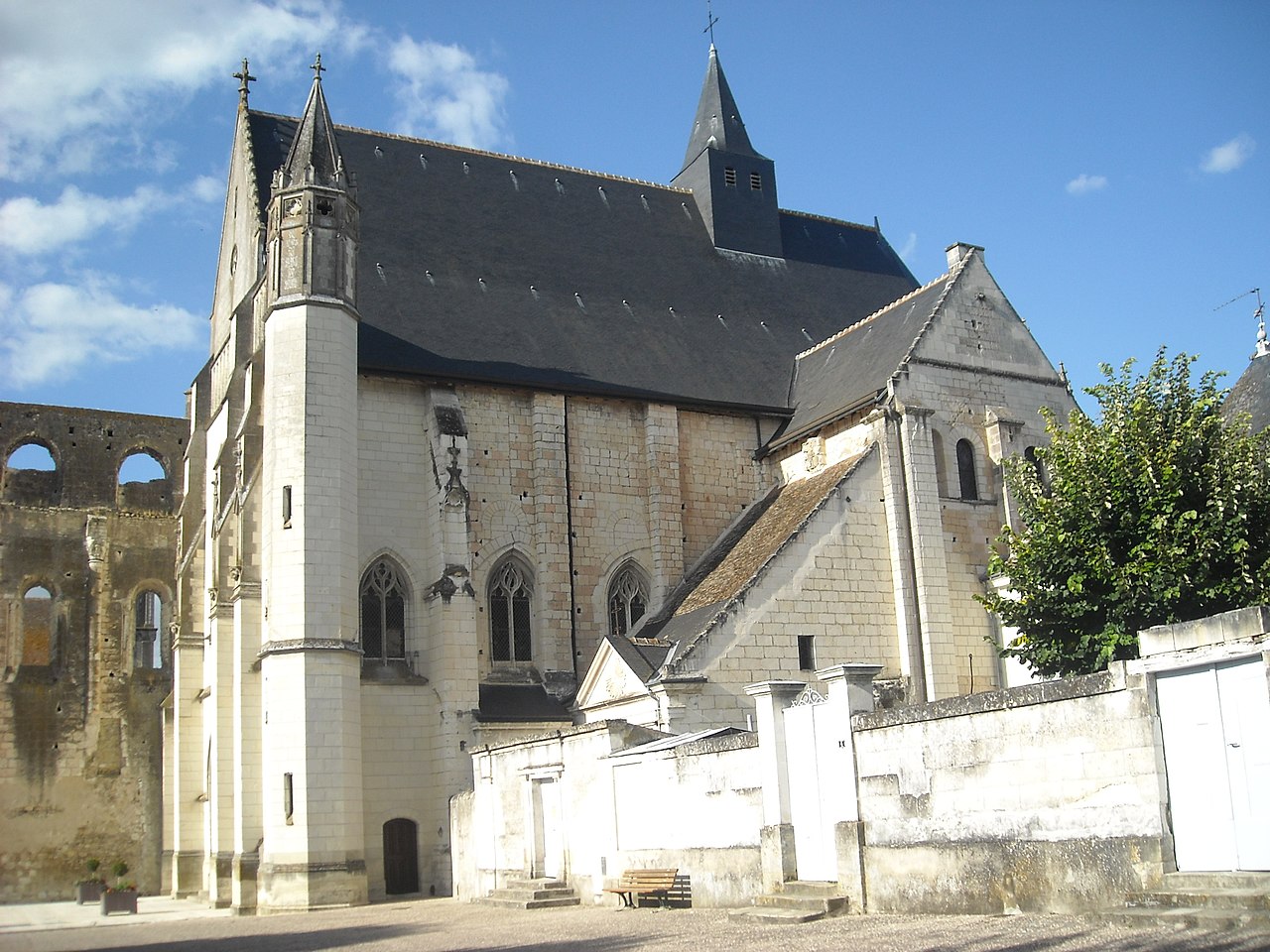
Beaulieu-lès-Loches — an extension
Before Loches, other forms appear again. The bell tower, the abbey church, another density of the territory.
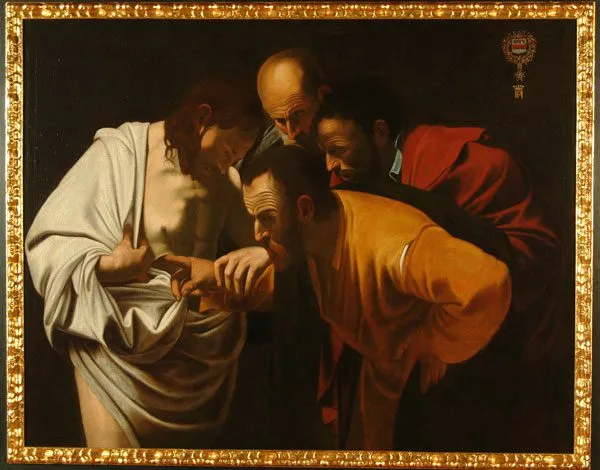
Loches — the rediscovered works
In Loches, the canvases linked with Caravaggio bear witness to old circulations between Rome, the Liget and the collections of Philippe de Béthune.
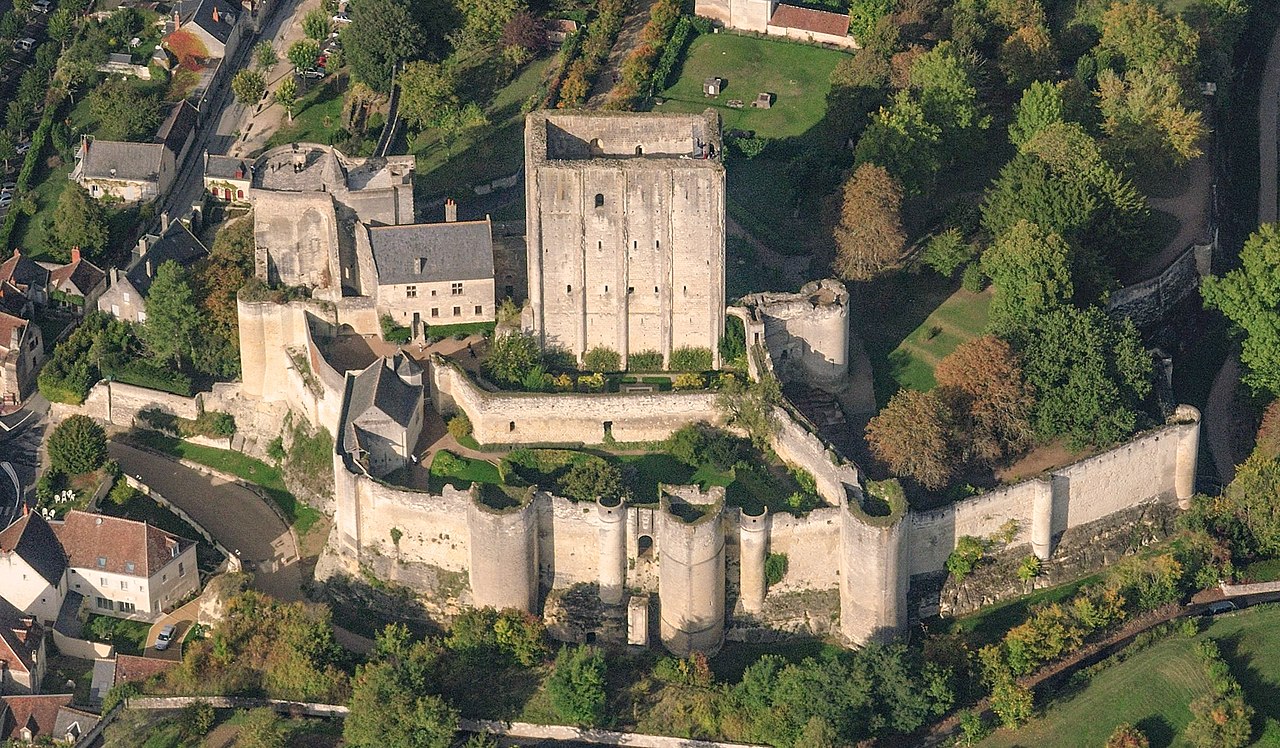
Loches — the other end
Keep, collegiate church and upper town compose a monumental density. Another answer to the point of departure.
The route cannot be reduced to a sequence of places. It is composed in the movements, then in the return — when the territory, once crossed, begins to be read differently.
Reading the Treasure Route on the map
The map makes it possible to situate at a glance the places that compose the route, between Beauval, Montrésor, the Liget, La Corroirie and Loches.
Frequently asked questions about the Treasure Route
A few markers to understand this route, prepare its discovery and choose one’s rhythm from La Corroirie.
What is the Treasure Route around La Corroirie?
The Treasure Route links several places around La Corroirie where works of art, architecture, landscapes and old memories remain perceptible. It offers a shared reading of the territory between the ZooParc de Beauval, Loches, Montrésor, the Liget and other nearby sites.
Which places can one discover on the Treasure Route?
The Treasure Route links, among others, the ZooParc de Beauval, the royal town of Loches, the canvases linked with Caravaggio, the Liget, the chapel of Saint-Jean du Liget, the Château de Montrésor, Beaulieu-lès-Loches, Nouans-les-Fontaines and La Corroirie itself.
Can the Treasure Route be followed from La Corroirie?
Yes. From La Corroirie, Loches can be reached in about twelve minutes and the ZooParc de Beauval in about twenty-five minutes. This proximity gives the territory a particular continuity and makes it possible to connect several places during the same stay.
Is the Treasure Route only about works of art?
No. It also links churches, collegiate churches, chapels, inhabited interiors, landscapes, ponds, forests, birds and calm waters. Biodiversity is also part of these treasures, less visible, but essential.
How can one follow the Treasure Route?
Following the Treasure Route does not mean chaining visits together, but allowing correspondences to appear between places. It can be approached on foot, by bicycle, on horseback or by car, according to the rhythm of the stay and the way one chooses to inhabit the territory.
Why stay at La Corroirie to discover this route?
Staying at La Corroirie makes it possible to radiate towards the sites of the Treasure Route, then return to a place where water, buildings and silence alter the perception of what has been seen elsewhere. To stay here for several days allows places, works and landscapes to answer one another over time.

 Français