

 Français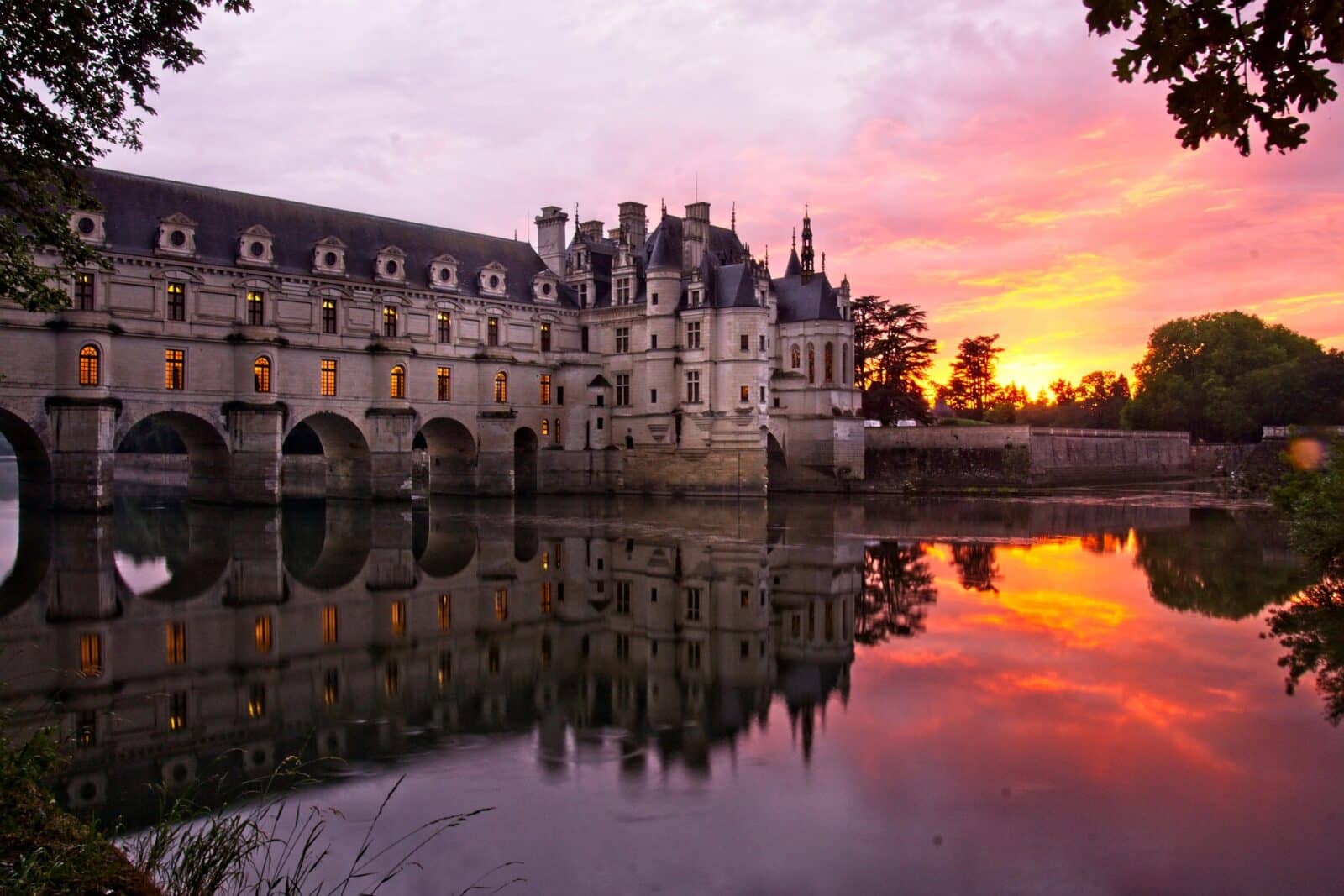
Visiting Chenonceau from La Corroirie
From La Corroirie, Chenonceau belongs naturally within a stay of several days in Touraine: a day that leaves the woodland and old stone of the château-monastery, reaches the River Cher, and then returns to a quieter landscape.
Travelling to the Château de Chenonceau from La Corroirie means gradually changing scale. The forest and small roads of southern Touraine give way to the Cher valley and, finally, to a château whose architecture seems to grow directly out of the river.
Chenonceau is more than its famous silhouette. The château reveals itself through rooms, galleries, gardens, perspectives and water. It deserves time precisely because its relationship with the landscape cannot be understood in a single glance.
The return to La Corroirie is still part of the day. After the movement and visitors of Chenonceau, the moat, the Forest of Loches and the silence of the estate give another depth to what has just been seen.

Chenonceau, a château shaped by the River Cher
At Chenonceau, the river is not simply a setting for the monument. It belongs to its architecture.
The earliest part of the Renaissance château was built on the site of a former mill standing in the bed of the River Cher. The bridge later carried the building across the water, before the long gallery was constructed above it, giving Chenonceau the form for which it is now immediately recognised.
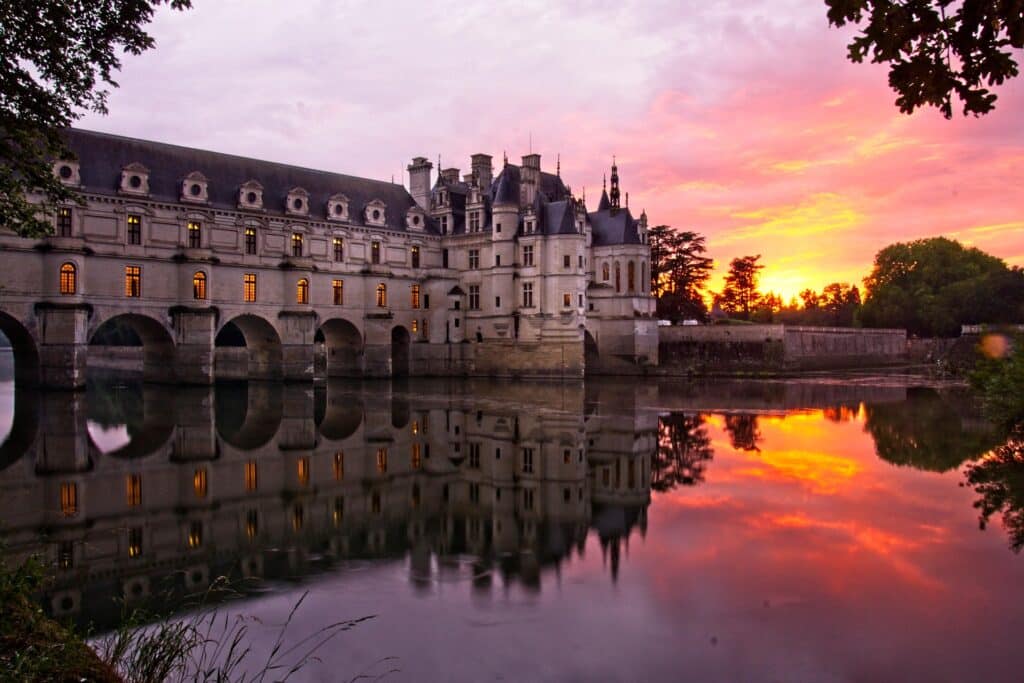
Water also changes the way the château is experienced. It can be seen from the gardens and riverbanks, through windows and from within the gallery itself. With changing light, the Cher becomes reflection, perspective and almost another interior space.
Among the places to discover during a stay around La Corroirie, Chenonceau holds a particular position, not only because of its fame but because architecture, water and landscape remain so closely bound together.
A château shaped by women
The history of Chenonceau can also be read through the women who built, inhabited, transformed and preserved it.
Catherine Briçonnet played an important part in the construction of the Renaissance château. Later, Diane de Poitiers created her garden and had the bridge built across the Cher.
Catherine de’ Medici subsequently took possession of Chenonceau and had the gallery constructed over the bridge. The two gardens associated with Diane and Catherine still preserve different ways of composing the château, water and landscape.
Other women continued to leave their presence here, among them Louise of Lorraine and Louise Dupin. This succession of female figures is at the origin of the name often given to Chenonceau: the “Ladies’ Château”.
The château also remained part of French history in the twentieth century. It served as a military hospital during the First World War, while its position across the Cher gave the site an unusual significance during the Second World War.
Taking time for the gardens and the river
Chenonceau changes when attention moves beyond the château itself.
The gardens of Diane de Poitiers and Catherine de’ Medici offer two distinct compositions around the monument. From their paths, the façades, bridge and gallery return to their place within a broader landscape.
It is also worth leaving time for the banks of the Cher. From beside the river, the architecture can be read differently, through reflections and changing perspectives. Chenonceau can seem less like a château built beside water than one that has become part of it.
This time outdoors balances the visit to the rooms and apartments. The experience becomes less a succession of interiors than a continuous movement between history, gardens, water and light.
Opening times and visiting conditions change through the year, so it is useful to check them before setting out. Tickets for the Château de Chenonceau can be purchased through the Loches Touraine Châteaux de la Loire ticket office. They are also available in person at the tourist office in Montrésor, close to La Corroirie.
For information about the château, its gardens and current visiting conditions, visit the official Château de Chenonceau website.
Chenonceau within a longer stay in Touraine
From La Corroirie, Chenonceau does not need to be combined with several other major châteaux on the same day.
Staying for several days gives each place its own time. Chenonceau can occupy one day, while Loches, Montrésor, the Forest of Loches or the smaller landscapes of southern Touraine can belong to another.
Seen in this way, the places do not blur into one another. Chenonceau keeps its river, gardens and light; Loches its fortified heights and royal city; Montrésor the more intimate scale of a village beside the Indrois.
For another way of reading this part of Touraine, the Treasure Route gathers together other places that can be approached from La Corroirie without turning the stay into a sequence of hurried stops.
Returning towards Montrésor, Loches and southern Touraine
The journey back from Chenonceau gradually returns to a quieter part of Touraine.
La Corroirie lies between Loches and Montrésor, on the edge of the Forest of Loches.
These two places offer another reading of the region. In Loches, the town rises towards its royal and fortified centre. In Montrésor, château, village and the River Indrois remain closely intertwined.
Their proximity to La Corroirie means that they can be discovered separately, on different days of the stay, rather than being gathered into a single itinerary.
After Chenonceau, returning to La Corroirie
A visit sometimes acquires another meaning in the hours that follow it.
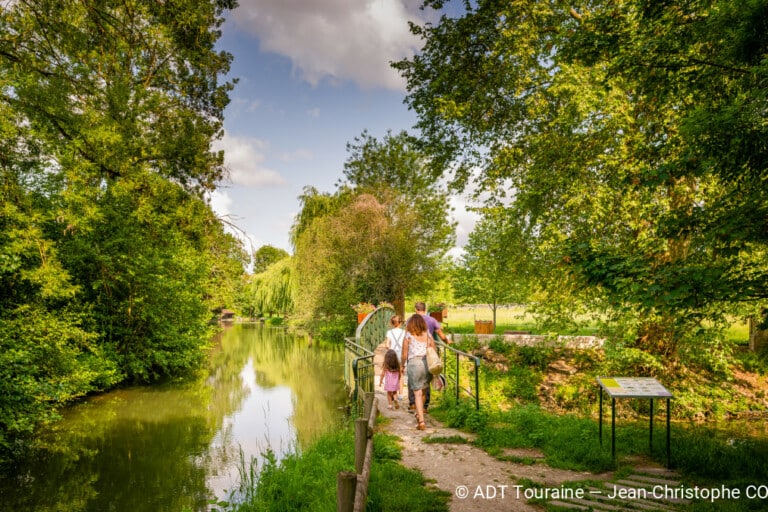
After Chenonceau, returning to the château-monastery allows the day to settle differently. The contrast is tangible: after galleries, gardens and visitors come the moat, meadows, woodland and old buildings of La Corroirie as the estate returns to its quieter rhythm.
The evening does not necessarily call for another excursion. There can simply be time to walk towards the pond, return to a room, read, or watch the light change on the old stone.
This is also what gives coherence to a stay of several days: leaving to discover Chenonceau, Loches or Montrésor, then returning each evening to the same place until La Corroirie itself becomes part of the journey.
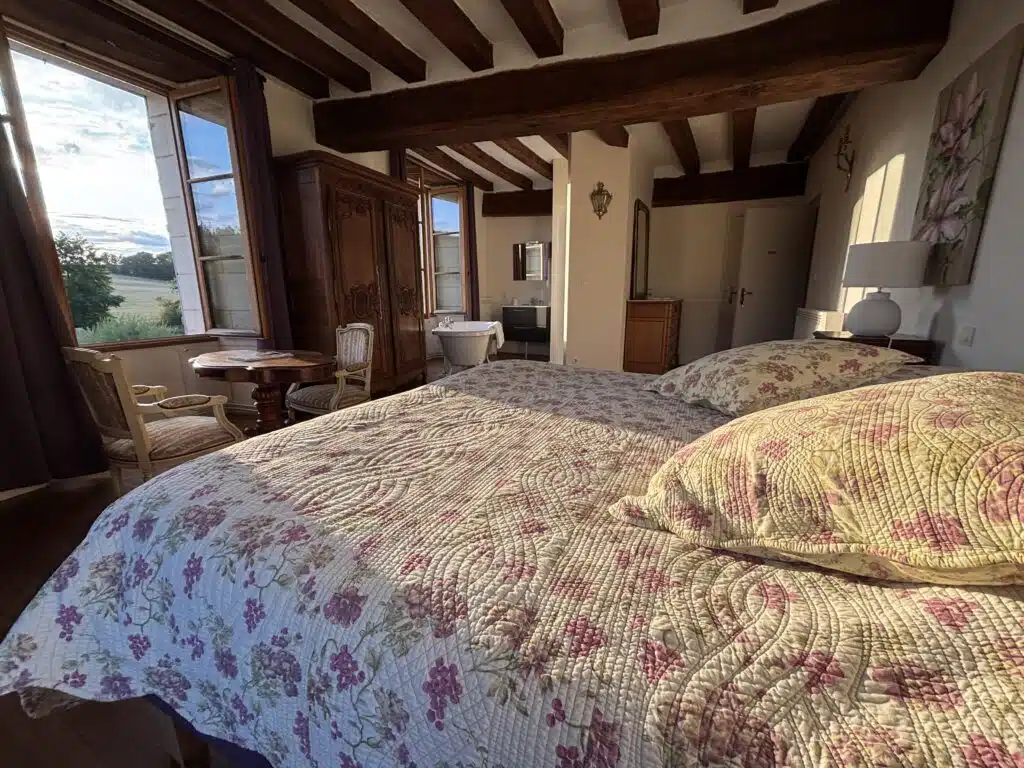
A few days in Touraine from La Corroirie
Chenonceau can therefore become part of a wider stay without becoming one more château to cross off a list.
- A day for Chenonceau, its gardens and the River Cher
- Another for Loches and its royal city
- Time for Montrésor and the Indrois valley
- Hours left open for the Forest of Loches, the paths and the pond
- Returning each evening to La Corroirie