


 Français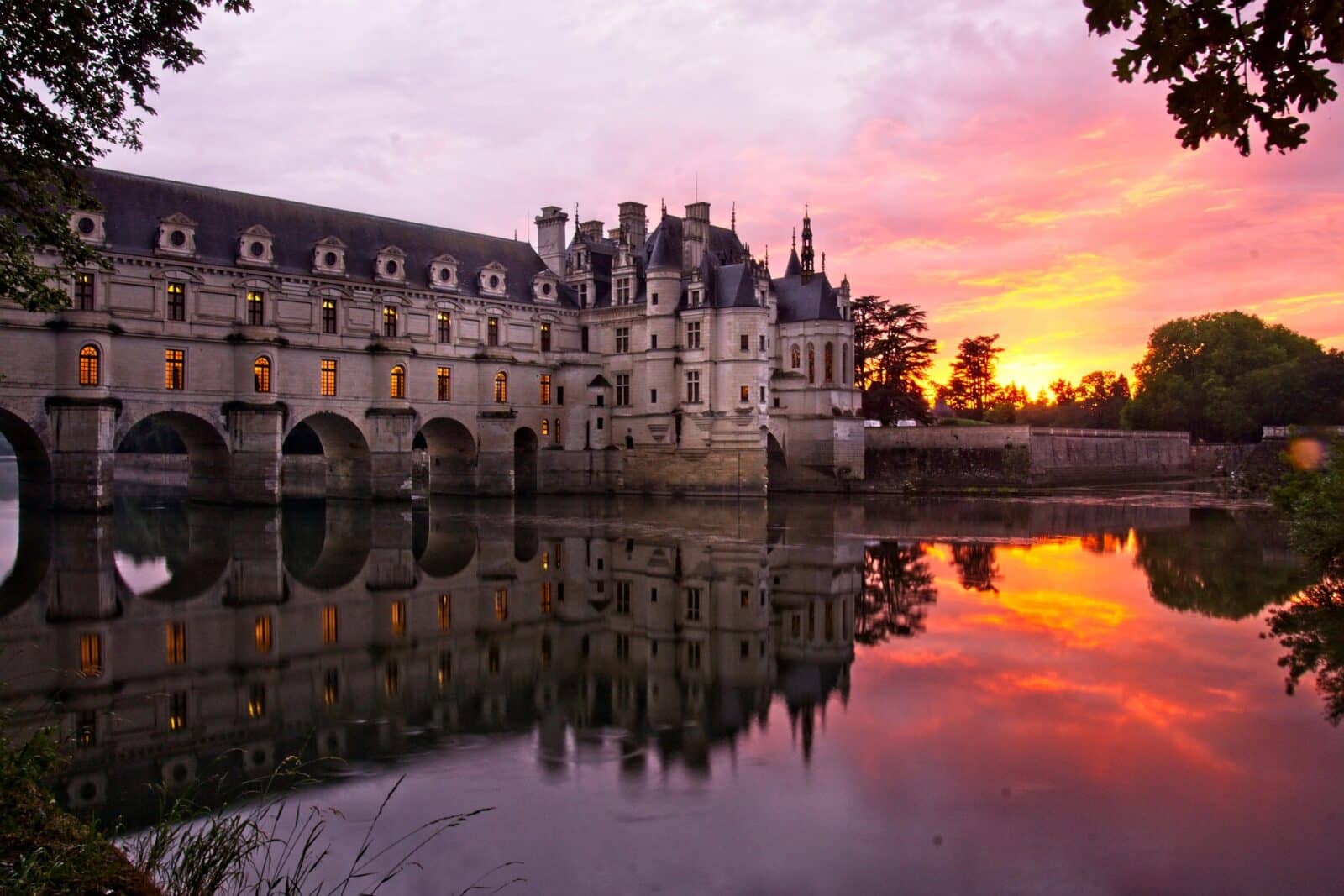
Must-sees in the Loire Valley, from La Corroirie
From La Corroirie, several of the Loire Valley’s châteaux, historic towns, villages, gardens and landscapes can be discovered while keeping the same place to return to each evening.
La Corroirie lies between Loches and Montrésor, in southern Touraine. Nearby are Montrésor, Loches and Chédigny; further away, Chenonceau, Amboise, Villandry, Chaumont-sur-Loire, Chambord and other places can find their place within a stay of several days.
The aim is not to collect as many visits as possible, but to choose a few places according to distance, season and the rhythm of the day, before returning to the calm of the château-monastery.
Places to visit near La Corroirie
From La Corroirie, the roads open towards very different horizons — stone villages, châteaux set upon water, composed gardens, wider landscapes. Nothing is entirely far away, yet everything asks for a little time.
A few minutes away, Montrésor appears almost naturally. The village unfolds along the Indrois, and its château, set above the valley, keeps the trace of a world that has remained intact.
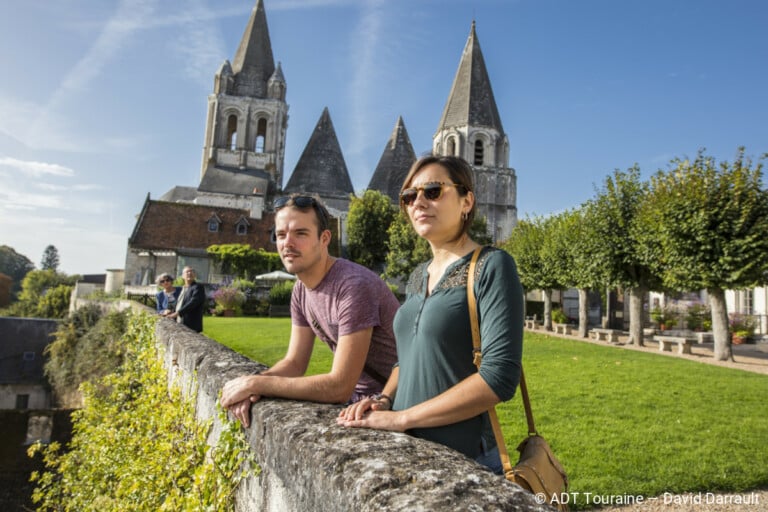
A little further on, the royal town of Loches gathers keep, royal residence and collegiate church within a density of stone where the centuries remain legible.
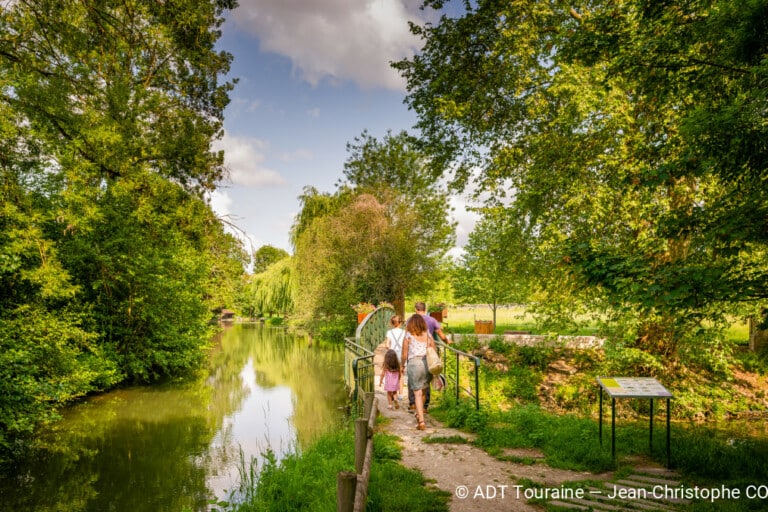
In Chédigny, roses accompany the walk, turning the streets into a slower crossing. In this first circle, places do not impose themselves. They simply accompany the stay at La Corroirie.
Within a close radius, other places extend this discreet relationship with the landscape. The Château de Montpoupon, hidden in a wooded hollow, keeps a more withdrawn presence.
Then the territory opens more widely. The ZooParc de Beauval, about thirty minutes away, brings another presence of the living world. One reaches it, then leaves it, returning to the calm of the château, the trees and the waters that surround La Corroirie.
Not far away, the Château de Chenonceau crosses the Cher with a singular lightness, while the Château de Valençay unfolds a broader presence.
Towards Amboise, the landscape becomes more fully part of the Loire. The Château royal d’Amboise overlooks the river, and the Clos Lucé continues this dialogue between place, invention and retreat.
More uncertain days may also leave room for discoveries closer to the place — the Élixir4 distillery, the visit of the château-monastery, or simply the return to the calm of the estate, where the gaze changes after having crossed the surroundings.

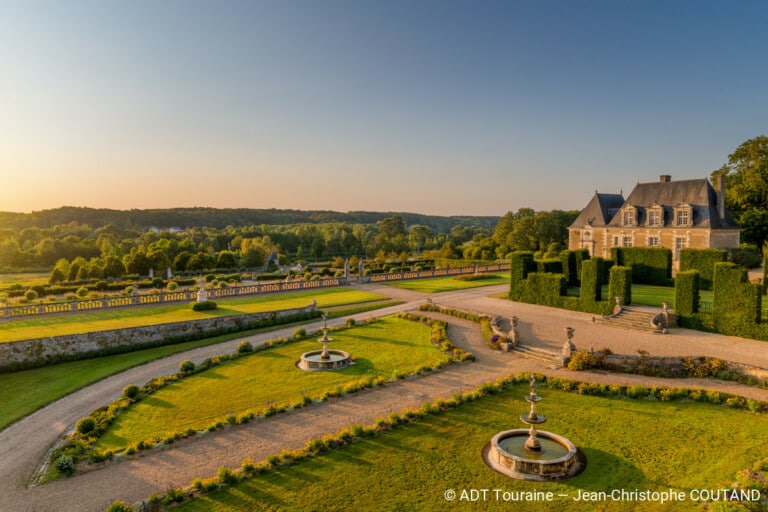
Gardens then take on another place — at Valmer, in open terraces, at Villandry, in an almost meditative composition, or at Chaumont-sur-Loire, where landscape becomes a material for creation.
Some places lie further away — Chambord, Blois or the Grand-Pressigny — but they widen the stay without breaking its rhythm.
Before going further, it is also possible to prepare the journey from the contact and practical information page, or to compose the days more freely from the rooms of La Corroirie.
Nothing here can be reduced to a list. Each place finds its place in the time of the stay, according to the season, the desire of the day, or simply the way one chooses to inhabit the landscape.
Reading the territory, then choosing a rhythm
A map makes it possible to locate the places at a glance. But a stay is not composed only by distance.
From La Corroirie, some sites ask for half a day, others for a shorter pause, others again can be approached on the return from a detour. Between a village such as Montrésor, a great Loire château, the ZooParc de Beauval or the gardens of Touraine, not everything belongs to the same tempo.
The markers below do not seek to create a complete inventory. They simply offer a way of reading the surroundings, so that the days can be composed from the rooms of the château, according to the season, the light or the desire to remain closer to the place. Calmer days may also leave room for the Élixir4 distillery, the visit of the château-monastery, or simply time spent on site, when the gaze needs to rest.
These days may also continue around a table, depending on the return, the season or the desire of the evening: a few restaurants around La Corroirie make it possible to compose the stay without breaking its rhythm.
Loire Valley highlights around La Corroirie
The map places the main sites around La Corroirie within a wider landscape of châteaux, villages, gardens and the countryside of Touraine.
This map uses Google Maps. Your consent is required before it can be displayed.
Markers around La Corroirie
These markers do not seek to be exhaustive. They simply make it possible to situate places around La Corroirie and to accompany the stay, according to the time one chooses to give them and the directions one follows.
Some places can be reached in a few minutes, others ask for half a day. All of them can take their place in the rhythm of the stay, between departures, detours and returns to the calm of the estate.
- Montrésor and its collegiate church (5 min) — A village set along the Indrois, between water and stone.
- Château de Montrésor (5 min) — An intact presence, marked by a history of exile.
- Royal town of Loches (15 min) — Keep, royal residence and collegiate church within a dense, legible town.
- Chédigny (15 min) — A garden village where roses accompany the walk.
- Château de Montpoupon (20 min) — Hidden in a wooded hollow, more withdrawn.
- ZooParc de Beauval (25 min) — Another scale of the living world, within reach of the stay.
- Château de Chenonceau (30 min) — Architecture carried by water.
- Château de Valençay (30 min) — A domain linked to Talleyrand, between breadth and discretion.
- Clos Lucé (35 min) — The last home of Leonardo da Vinci.
- Royal Château of Amboise (35 min) — A promontory above the Loire.
- Château Gaillard (35 min) — A more intimate Renaissance, linked with gardens.
- Grand-Pressigny (40 min) — A depth of time much older than the châteaux.
- Chaumont-sur-Loire (45 min) — Landscape and contemporary creation.
- Villandry (45 min) — Gardens of great precision.
- Domaine de Candé (45 min) — A place away from the expected routes.
- Château de Valmer (50 min) — Terraces, vines and open views.
- Cheverny (50 min) — Interiors and classical order.
- Azay-le-Rideau (50 min) — A château set upon water.
- Chambord (1 hr) — Architecture conceived as a gesture.
- Blois (1 hr) — A condensed reading of royal history.
- Futuroscope (1 hr 30) — A more contemporary escape.
To continue these routes, the practical information page helps situate access and travel times. But often, the days are simply composed from the place itself, as the stay unfolds.
Frequently asked questions about visits from La Corroirie
How should one organise days of visits from La Corroirie?
La Corroirie lies within a network of valleys, villages and historic places, with several major sites within a short drive and others suited to a longer day out. The simplest rhythm is often to alternate a larger visit with a more discreet halt, according to the light, the season or the wish of the day. We can help you situate these routes at breakfast, during your stay at La Corroirie.
Should Loire Valley châteaux be booked in advance?
Many sites, such as Montrésor, Montpoupon or Valençay, still allow a fairly free visit. Chenonceau, Amboise or Chambord may require booking in high season, especially at weekends. We can help orient your choices from day to day. It is also possible to book online through the Loches Val de Loire ticket office, or to consult the tourist offices of Montrésor and Loches.
Is the ZooParc de Beauval far from La Corroirie?
No. It is about 25 minutes away. Many visitors choose to reach it via Nouans-les-Fontaines, a quieter road leading to the south entrance and often avoiding part of the traffic. From La Corroirie, the journey there and back remains simple within the day.
How much time should one allow for the ZooParc de Beauval?
Half a day, or a little more, is often enough. Some guests choose a later breakfast, then leave at the end of the morning, before returning more quietly to the estate. At the end of the day, the rhythm of the park changes, and observation can become more pleasant.
Can one walk from La Corroirie to Montrésor?
Yes, if you enjoy walking. The route takes about 45 minutes through woods and meadows. We can indicate the path. Walking to Montrésor, then returning to the estate at the end of the day, often extends the rhythm of the stay very naturally.
What can one do on rainy days?
The Clos Lucé, the Grand-Pressigny Museum of Prehistory, the Élixir4 distillery on site, the underground passages of Betz-le-Château or the museums of Loches offer other ways to discover the region. It is also possible to remain closer to the place, by discovering the history of the château-monastery or consulting our practical information. And rain in Touraine often changes more quickly than one imagines.