


 Français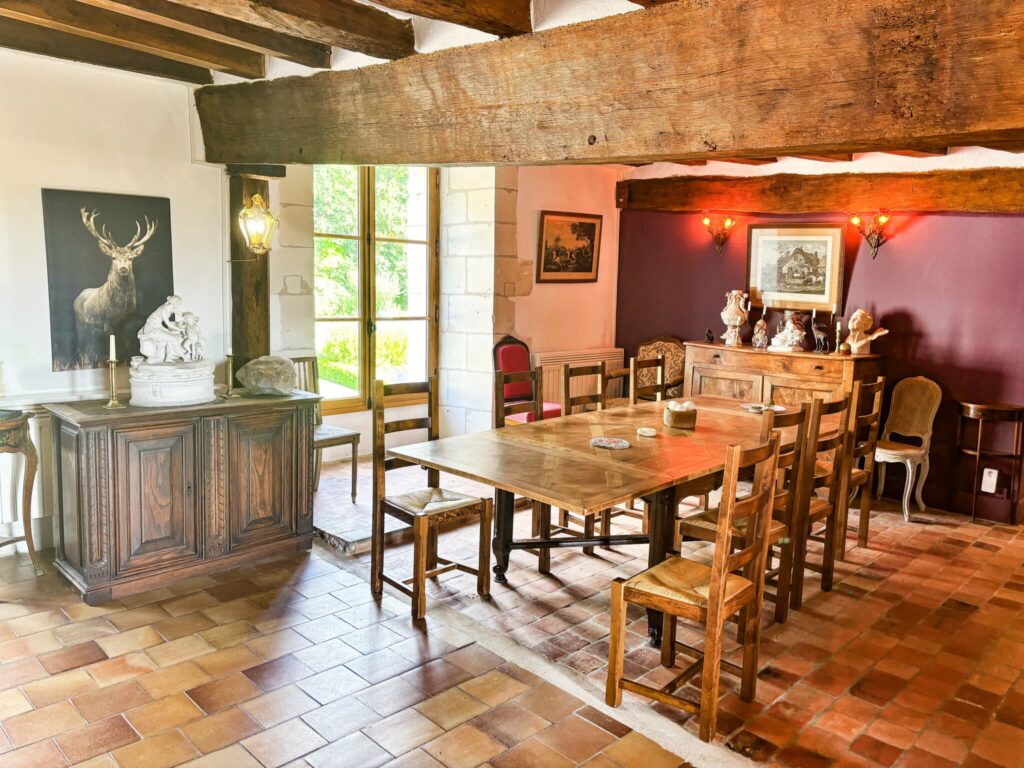
A weekend in the Loire Valley can easily become a succession of châteaux, roads and car parks. Yet the region reveals itself differently when one chooses a single place to stay and lets the visits unfold around it.
For travellers looking for a Loire Valley château itinerary, two or three days already make it possible to discover several very different faces of Touraine. Staying a little longer allows the distances to matter less and the landscape between the monuments to become part of the journey.
Day 1: Chenonceau and the landscapes of the Cher
The Château de Chenonceau offers a natural starting point. Built across the Cher, it brings together architecture, gardens, water and several centuries of history in a place that deserves more than a hurried crossing.
Rather than adding several major monuments to the same day, the surrounding countryside can extend the visit more quietly. Roads through the Cher valley, villages and wooded landscapes gradually lead back towards southern Touraine.
Returning to the same place in the evening changes the rhythm of the journey. There is no need to repack or move on immediately: the day can settle before the next one begins.
Day 2: La Corroirie, Loches and Montrésor
A second day can remain closer to La Corroirie. The Château-monastère de la Corroirie is a former fortified Carthusian monastery, inhabited today and still closely connected to its church, medieval buildings, moat and surrounding landscape.
The visit does not need to occupy the whole day. It can form part of a slower itinerary leading towards Loches, with its keep, royal residence and collegiate church, or towards Montrésor, where the village follows the Indrois beneath the château.
These places are close enough to be combined without turning the day into a race. They also allow time to return to La Corroirie before evening and rediscover the estate when the visitors of the day have gone.
Day 3: choosing rather than accumulating
If the stay extends to a third day, it is tempting to add Chambord, Cheverny, Amboise or several other great Loire châteaux. A more satisfying approach is often to choose one direction.
Towards Amboise, the Loire and the Renaissance become more present. Further north-east, Chambord belongs to another scale altogether, both through its architecture and through the vast domain that surrounds it. Gardens such as Villandry or Chaumont-sur-Loire can lead to yet another way of reading the territory.
Our must-sees in the Loire Valley bring these possibilities together without turning them into a compulsory list.
Where to stay for a Loire Valley château itinerary
The choice of accommodation has a direct influence on the rhythm of the visit. Changing rooms every night may appear efficient on a map, but it also adds departures, arrivals and luggage to days already filled with discoveries.
At the Château-monastère de la Corroirie, the five rooms are part of the historic place itself. Staying several nights makes it possible to explore Chenonceau, Loches, Montrésor, Beauval and other parts of Touraine while returning each evening to the same landscape.
The stay then becomes more than a practical base for visiting the châteaux. Mornings, evenings, the garden, the church, the moat and the quieter hours become part of the experience in their own right.
Leaving room for gardens, villages and food
The Loire Valley is not made only of monumental châteaux. Villages, gardens, forests and tables encountered along the way often give the days their balance.
Around La Corroirie, the routes can be composed according to the season and the desire of the day. A walk towards Montrésor, a garden, a market or an evening meal nearby may sometimes occupy as much space in the memory of a stay as one of the great monuments.
A selection of restaurants and places to eat around La Corroirie can help extend these days without imposing another long journey.
When to visit the Loire Valley
Spring and autumn lend themselves particularly well to exploring the Loire Valley, when gardens, forests and historic towns can be approached at a quieter pace. Summer offers longer days, while winter changes the relationship with the monuments and landscapes, with shorter light and fewer visitors in many places.
There is therefore no single ideal season. The most important choice is often not when to come, but how much time to leave between the places one wishes to discover.
From a weekend itinerary to a longer stay
Two or three days can offer a first reading of the Loire Valley. They are enough to understand its diversity, but rarely enough to exhaust it.
Remaining several nights in the same place allows the itinerary to loosen. A château can take longer than expected, a village can invite a detour, or a day can simply remain closer to the estate.
From La Corroirie, the Loire Valley can therefore be approached not as a circuit to complete, but as a territory to inhabit for a few days, between visits, roads, returns and quieter moments.