



 Français
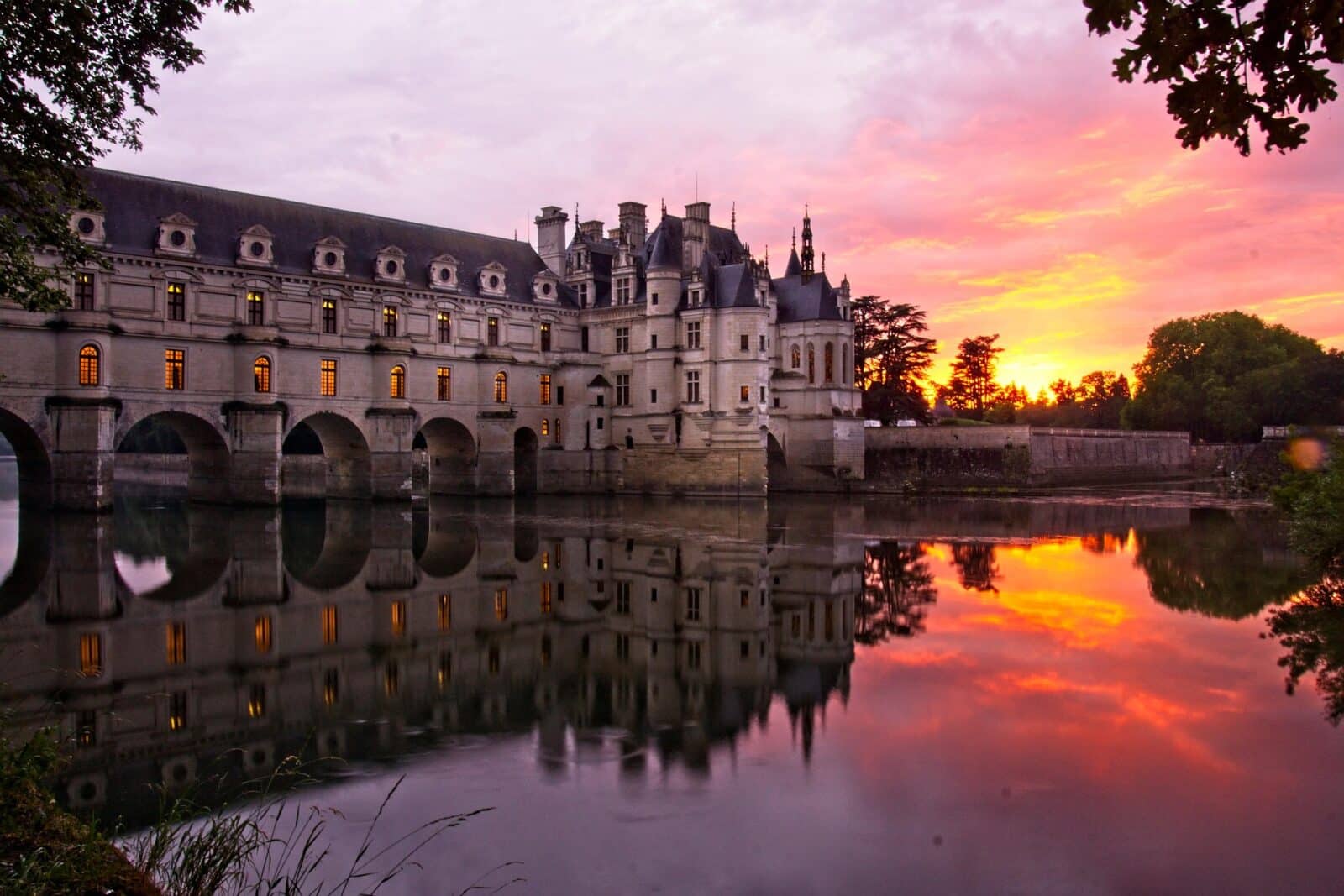
Visit Chenonceau: the château, its gardens and the River Cher
To visit Chenonceau is to discover a château whose architecture seems to extend directly into the River Cher. The river, the gardens, the rooms and the long gallery built over the water form a whole that deserves more than a brief stop.
Chenonceau reveals itself through its rooms, views and gardens, but also from the riverbanks. Depending on the time of day and the light, the château takes on a different presence. The Cher becomes a reflection, a horizon or a continuation of the architecture.
Half a day gives you time to explore the château and its gardens without rushing. A longer visit also leaves room to walk, watch the river and see more than Chenonceau’s most familiar silhouette.
From La Corroirie, a visit to Chenonceau fits naturally into a stay of several days in Touraine, with other days devoted to Loches, Montrésor or the landscapes of southern Touraine.

Chenonceau, a château built with the River Cher
Here, the river is not simply a backdrop to the monument. It is part of the building itself.
The first part of the château stands on the site of an earlier mill in the bed of the River Cher. A bridge was later built across the river, followed by the long gallery above it. Together they gave Chenonceau its instantly recognisable form.
The presence of water also changes the way the place is experienced. You can view the château from the gardens and banks, through its windows and from within the gallery. As the light changes, the river becomes a reflection, a perspective or almost an interior extension of the building.
Among the places to discover around La Corroirie, Chenonceau stands apart, not only for its renown but for its relationship between architecture, water and landscape.
A château shaped by women
The story of Chenonceau is also told through the women who built, lived in, transformed and preserved it.
Katherine Briçonnet helped oversee the building of the château in the early Renaissance. Later, Diane de Poitiers had the bridge across the Cher built and laid out her garden.
Catherine de Médicis subsequently took possession of Chenonceau and had the gallery built above the bridge. Their two gardens, each with its own relationship to the château and the water, still recall these successive presences.
Other women left their mark on the estate: Louise de Lorraine, Louise Dupin and, later, women of the Menier family. This history helps explain Chenonceau’s enduring nickname, the Château des Dames, or Ladies’ Château.
In the twentieth century, Chenonceau again became part of wider history. It served as a hospital during the First World War, while its position across the Cher gave it a particular role during the Occupation.
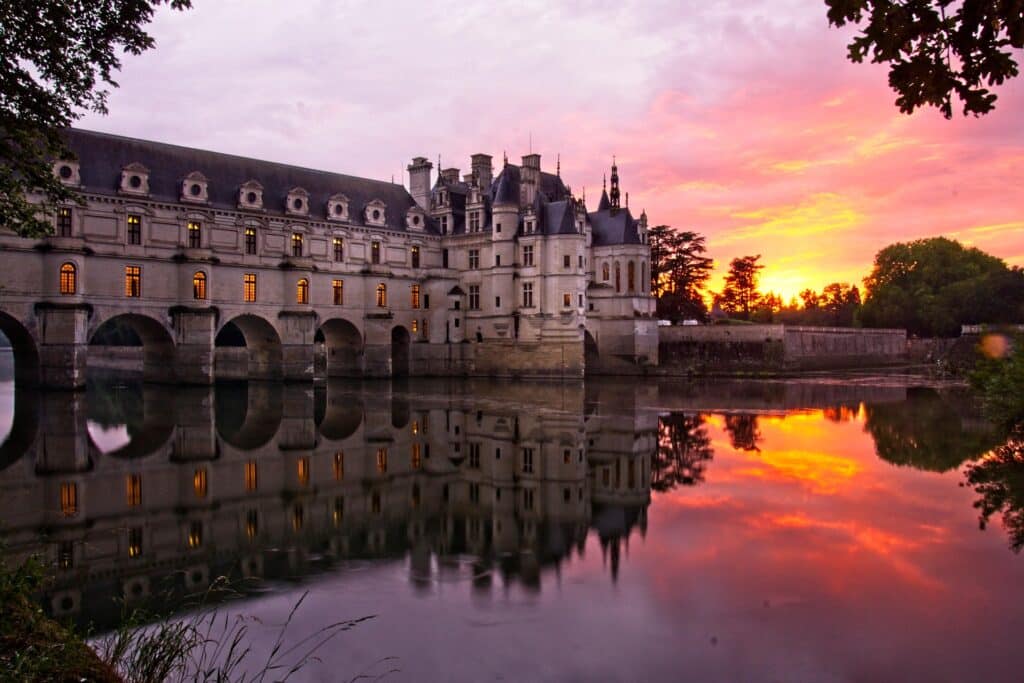
Take time for the gardens and the river
Chenonceau changes when you stop looking only at the château.
The gardens of Diane de Poitiers and Catherine de Médicis offer two distinct ways of arranging the landscape around the building. From their paths, the facades, bridge and gallery become part of a much wider view.
It is also worth leaving time for the banks of the Cher. Looking from the water helps you understand why Chenonceau seems less like a building beside a river than one resting upon it.
Time outdoors balances the visit to the rooms and apartments. The experience becomes a movement between history, gardens, water and light rather than simply a succession of interiors.
Opening hours and visiting conditions vary with the season. Tickets for Chenonceau are offered through the Loches Touraine Loire Valley ticket office. You can also enquire at the tourist information office in Montrésor, close to La Corroirie, about availability and current conditions.
For up-to-date information about the château, gardens, tickets and entry arrangements, consult the official Château de Chenonceau website.
Chenonceau as part of a stay in Touraine
From La Corroirie, there is no need to fit Chenonceau and several other châteaux into the same day.
A longer stay gives each place room to be enjoyed in its own time. Chenonceau can fill one day, while Loches, Montrésor, the Forest of Loches and the villages of southern Touraine can occupy the days that follow.
This way of exploring keeps the monuments distinct in your memory. Chenonceau has its river, gardens and light; Loches its fortified royal town; Montrésor the more intimate scale of a village beside the Indrois.
For another way to connect the region’s places and stories, explore the Treasure Route around La Corroirie.
Returning towards Montrésor, Loches and southern Touraine
The journey back from Chenonceau leads gradually into a quieter part of Touraine.
La Corroirie lies between Loches and Montrésor, on the edge of the Forest of Loches.
These two places reveal different sides of the region. Loches rises around its royal citadel and historic promontory. In Montrésor, the château, the village and the River Indrois remain closely connected.
Both are close enough to La Corroirie to discover on separate days, rather than trying to fit everything into a single itinerary.
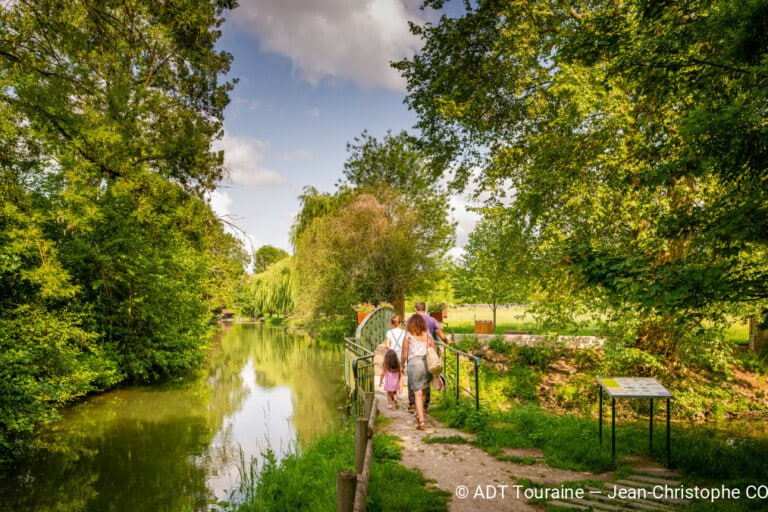
After Chenonceau, return to La Corroirie
Sometimes a visit takes on greater meaning in the hours that follow it.
After Chenonceau, returning to the inhabited château-monastery allows the day to settle. The contrast is tangible: after the busy galleries and gardens come the moat, meadows, trees and old buildings as La Corroirie grows quiet again.
There is no need to plan another visit that evening. There may simply be time for a walk around the pond, a book, or watching the changing light on the stone.
That is part of what makes a stay of several days worthwhile: setting out for Chenonceau, Loches or Montrésor and returning each evening to the same place, until the place itself becomes part of the journey.
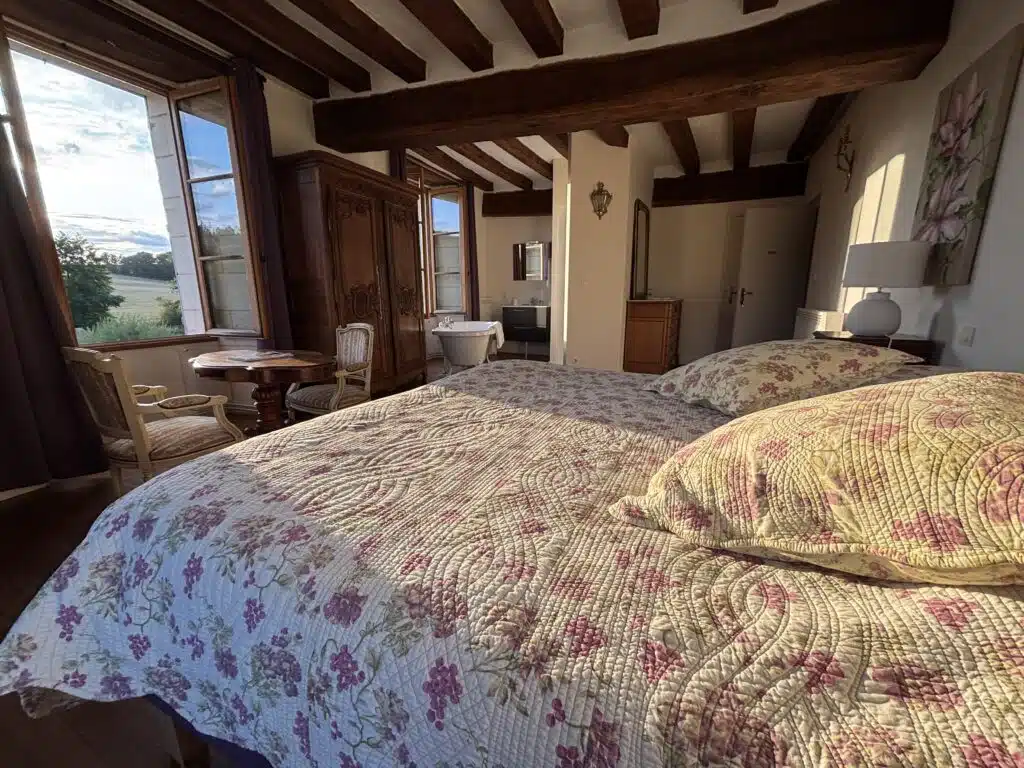
Several days to discover Touraine
Chenonceau can be part of a longer journey, rather than another sight to tick off a list.
- One day for Chenonceau, its gardens and the Cher
- Another for Loches and its royal citadel
- Time for Montrésor and the Indrois valley
- Unhurried hours for the Forest of Loches, the paths and the pond
- A return each evening to La Corroirie
Frequently asked questions about Chenonceau
How long should I allow to visit Chenonceau?
Allow at least half a day to explore the château, its gardens and the banks of the Cher. You may want longer if you plan to walk through more of the estate without rushing.
Do I need to book tickets to visit Château de Chenonceau?
Booking requirements and time slots may vary with the season and visitor numbers. Check the official Chenonceau website before your visit.
Can I buy Chenonceau tickets near La Corroirie?
Tickets are offered by the tourist offices serving Loches and Montrésor and through the Loches Touraine online ticket office. Ask locally about current availability and conditions.
Which gardens can I visit at Chenonceau?
The gardens associated with Diane de Poitiers and Catherine de Médicis offer two different perspectives on the château and the Cher, extending the experience beyond the historic rooms.
Where should I stay to visit Chenonceau and southern Touraine?
The five guest rooms at La Corroirie provide a base for several days exploring Chenonceau, Loches, Montrésor and the surrounding countryside, returning each evening to the quiet of the château-monastery.