


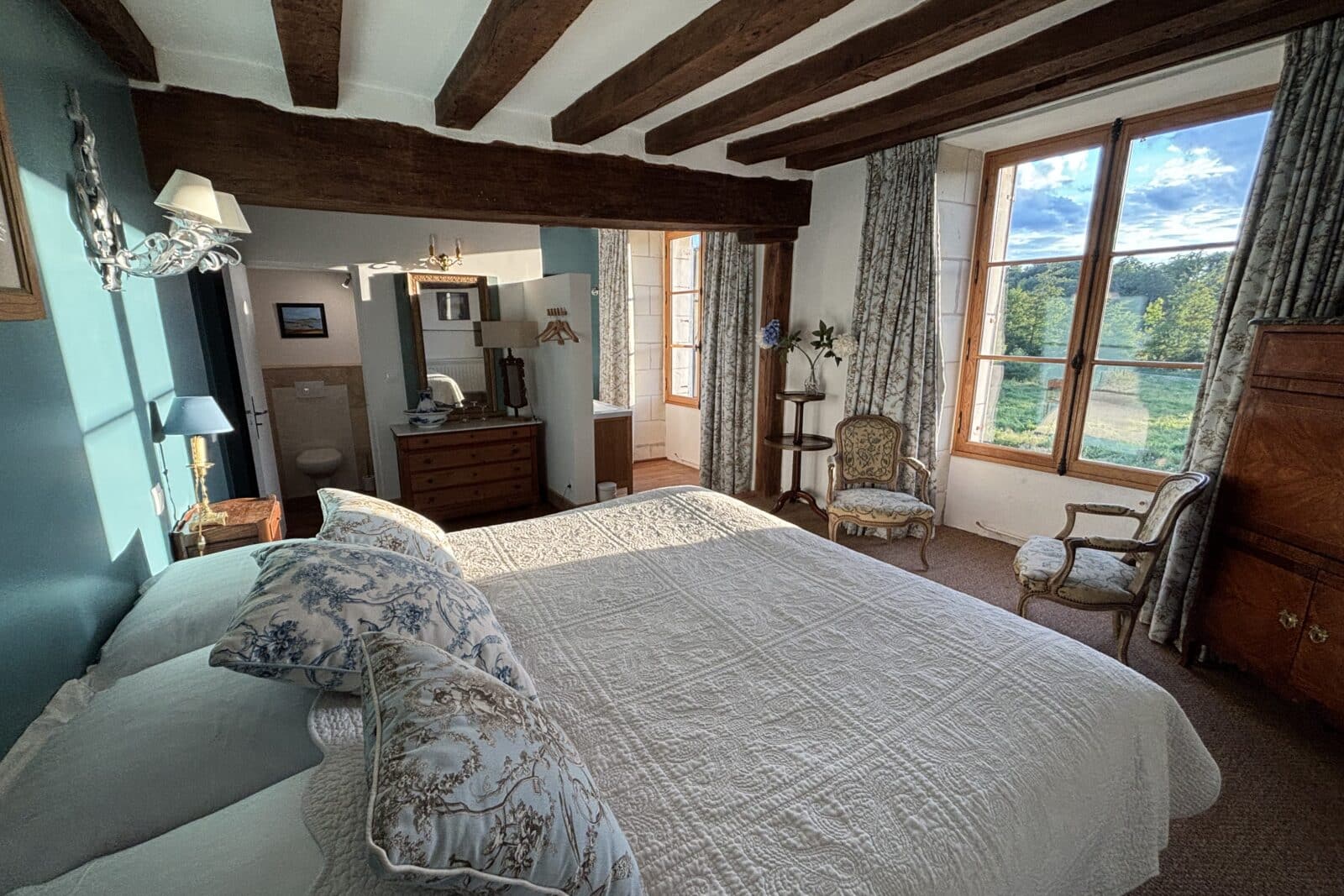
The Monial Room, open to the moat and horizon
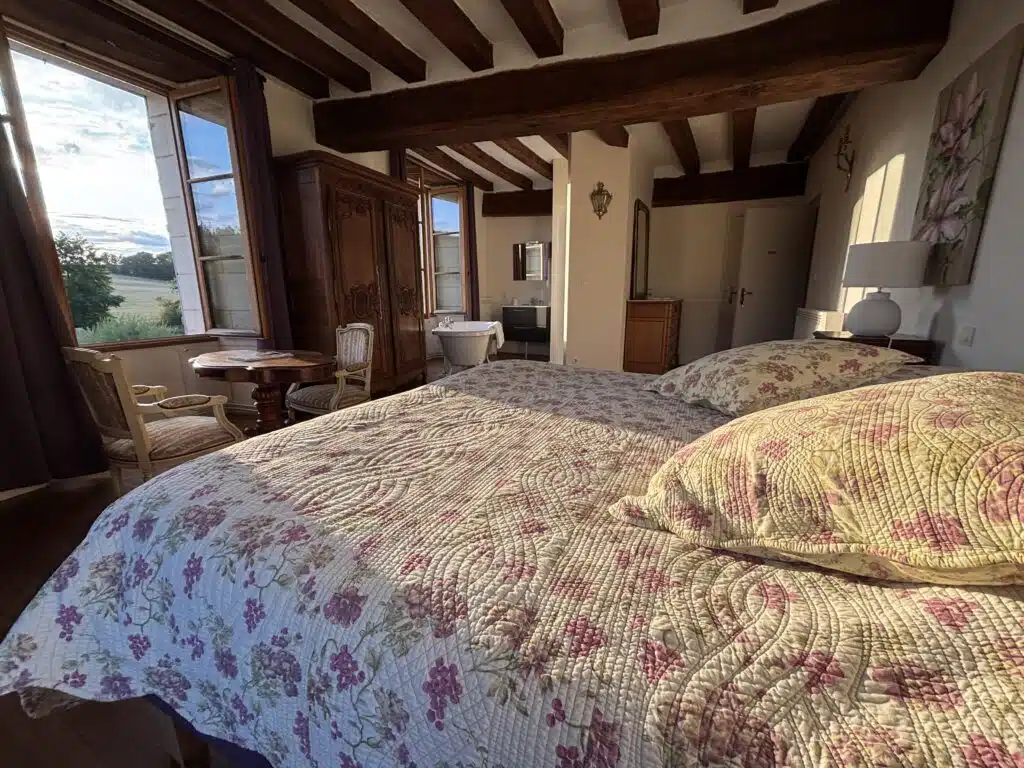
The Monial Room opens onto the moat, the meadows and the horizon. Light moves freely through the room, changing with the hours until evening.
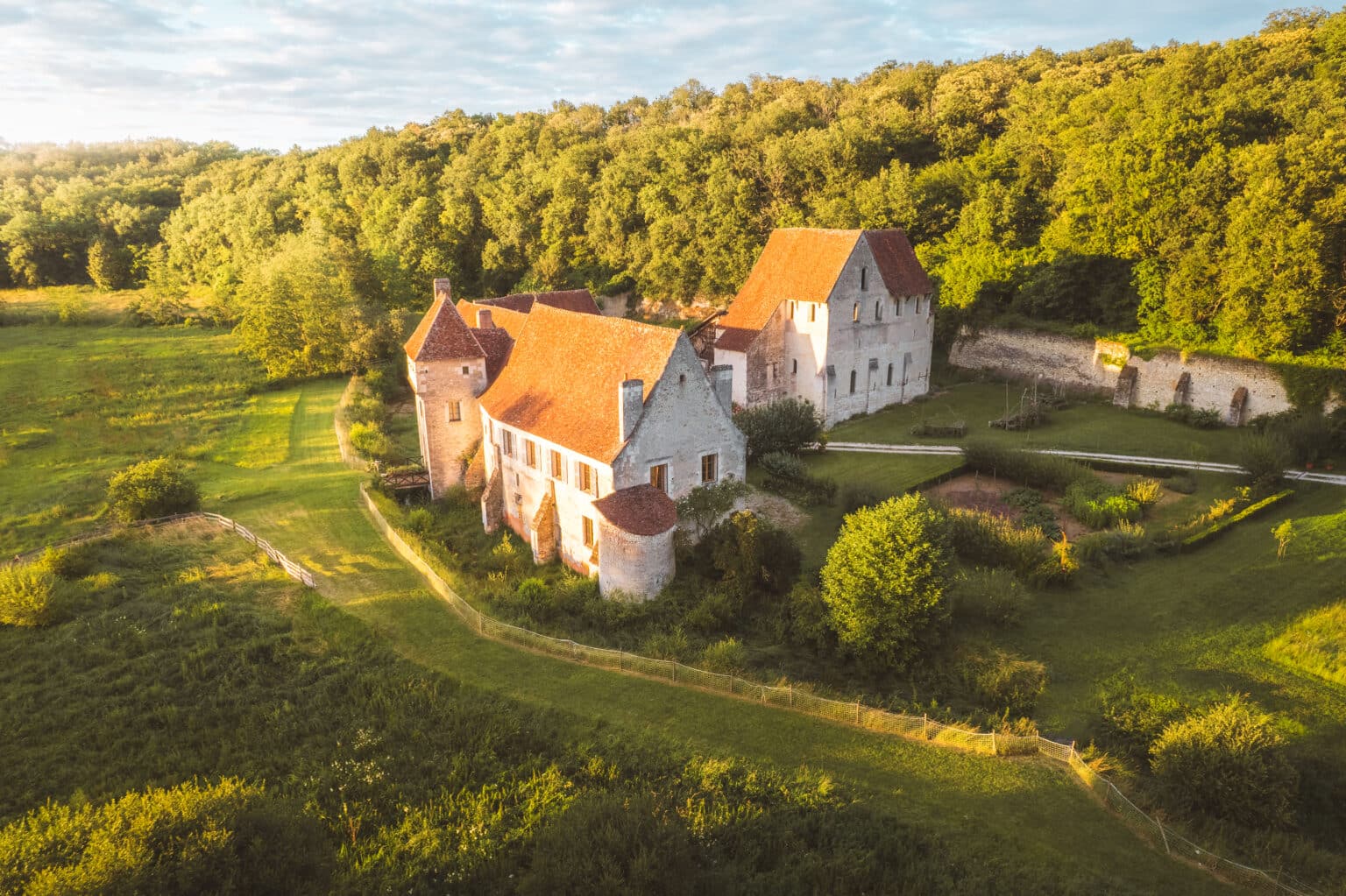
Materials and quiet tones keep the room closely connected to the landscape, at the heart of the château-monastery of La Corroirie.
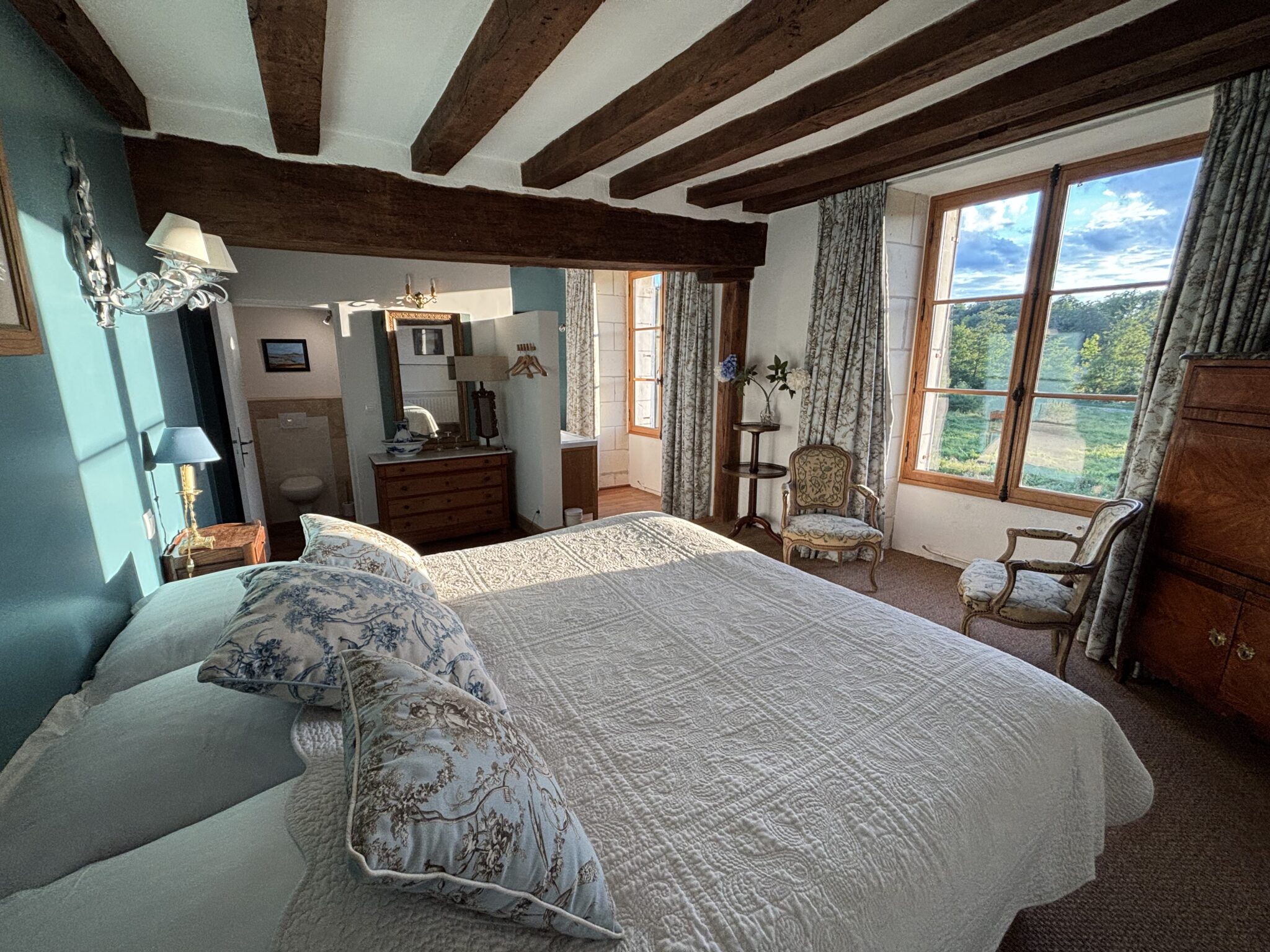
A room open to the horizon
From the Monial Room, the view reaches across the moat, the meadows, the fields and the edges of the forest. Nothing interrupts the eye. The space seems to continue naturally beyond the room, in a quiet continuity.
The large windows let the light enter freely. It follows the hours, changes the tones and brings different parts of the landscape into view.
The room does not hold the view back. It lets it circulate.

Light and the presence of materials
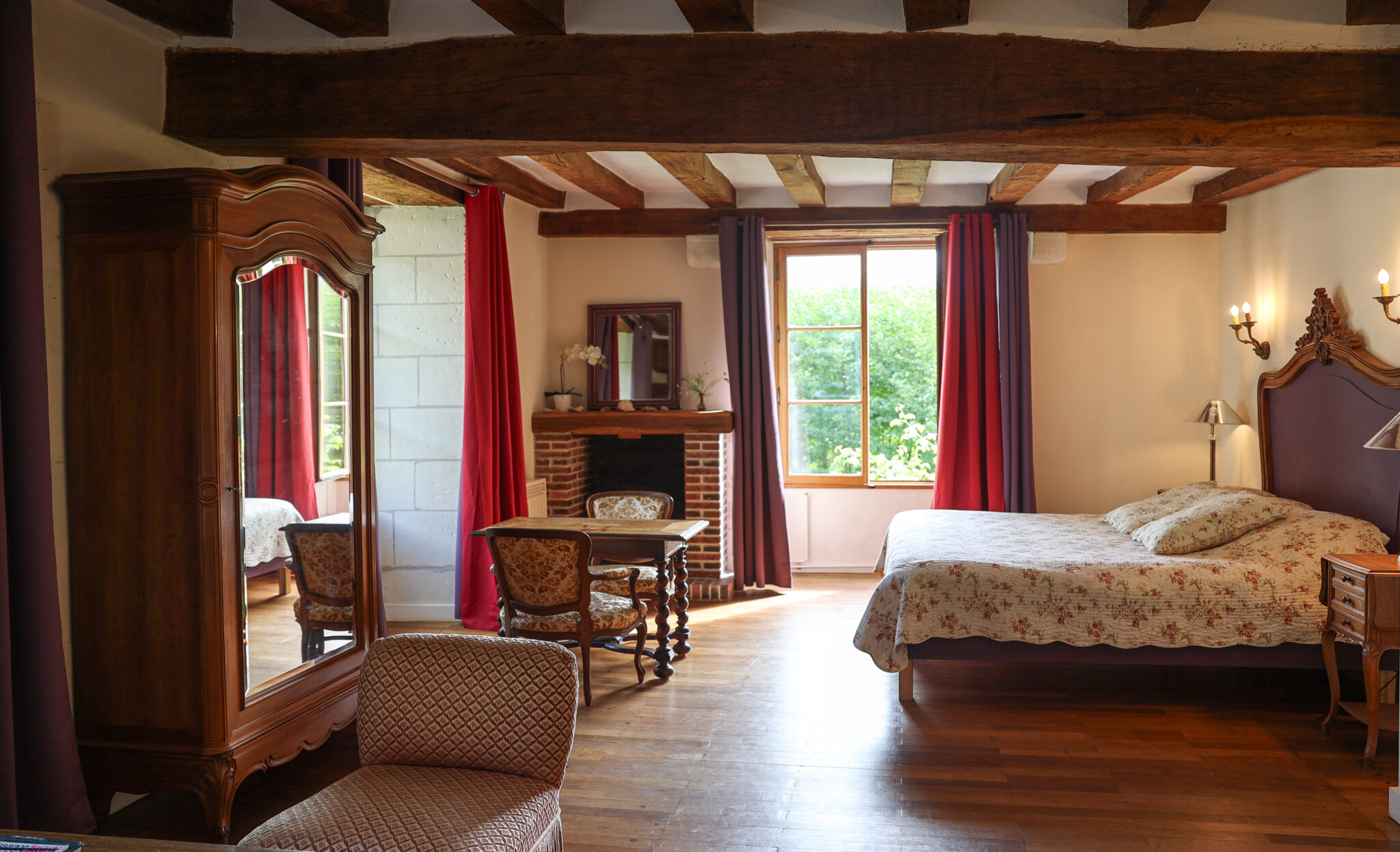
Fabrics and quiet tones accompany the light without holding it back. The materials remain present without imposing themselves, in a simple balance.
The room has a 180 x 200 cm bed and a bathroom with shower and washbasin. It belongs to the five rooms of the château-monastery of La Corroirie, each offering a different way of inhabiting an ancient place that is still lived in today.
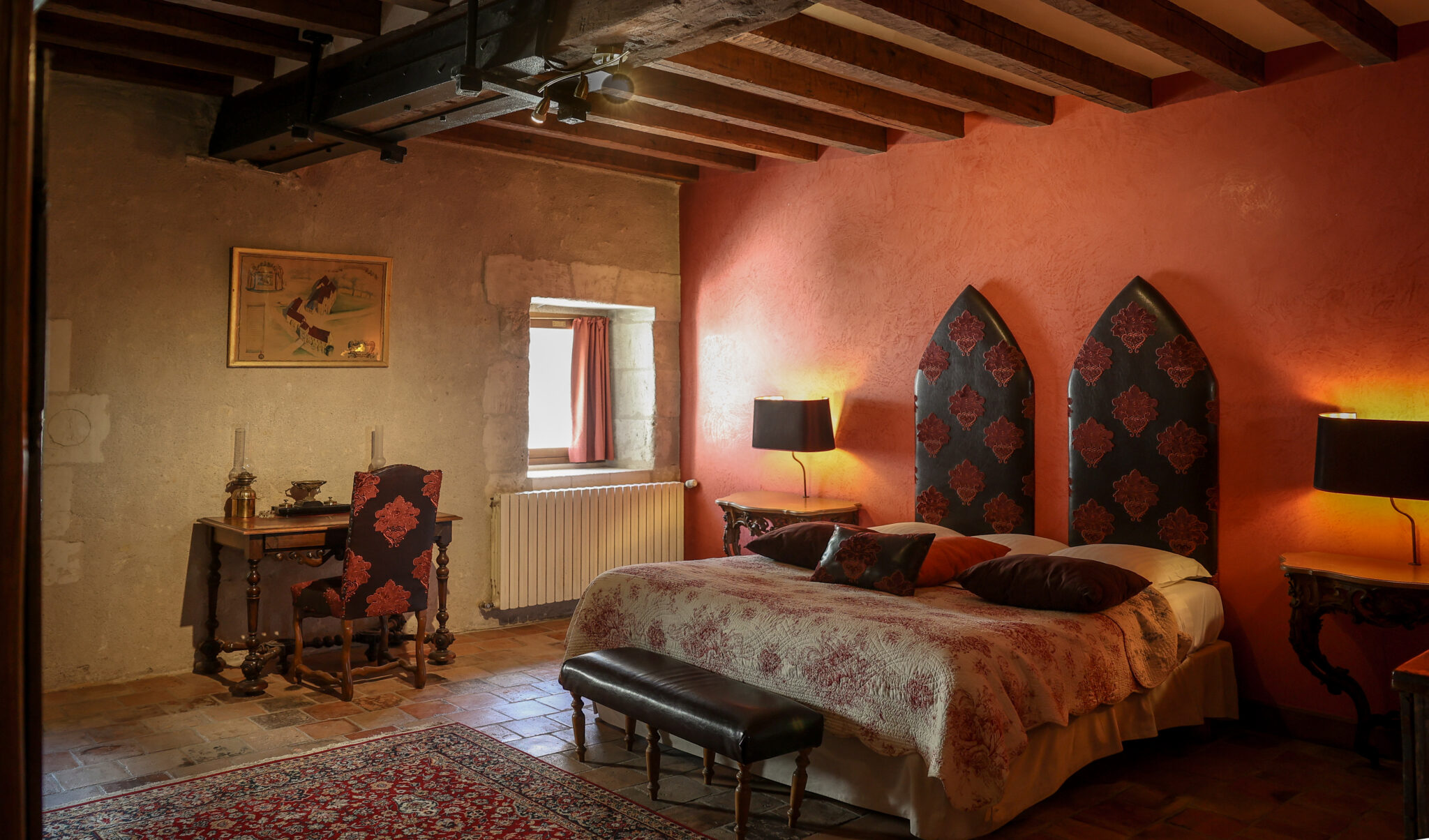
Staying here means inhabiting a room shaped by light, in a different relationship from the Seigneurial Room, which is more inward-facing and structured by its volumes.

From the Monial Room, extending the stay
From the Monial Room, the view naturally continues beyond the moat and the meadows. The horizon opens towards a broader landscape, where lines gradually fade into the light.
A few minutes away, the village of Montrésor offers a first encounter between river and old stone. Further on, the royal town of Loches offers another way of approaching the history of Touraine.
Some days carry this movement further, towards places such as the Château de Chenonceau, set across the water.
Yet often, what matters most remains here: in this simple openness between light, horizon and silence.
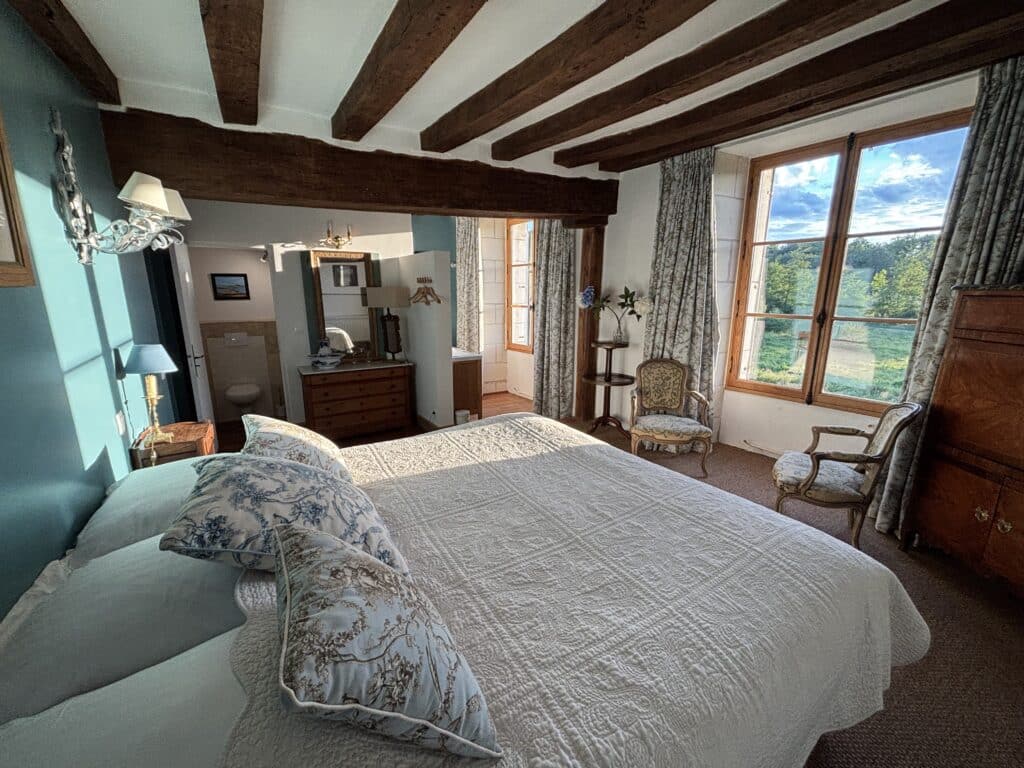
Practical details of the Monial Room
The Monial Room remains first and foremost a room open to the horizon and the light. A few practical details make it easier to prepare the stay without reducing the experience of the place to a list of amenities.
- Access: the room is on the first floor of the château, with no lift; a small bag or light luggage is easier to carry upstairs than a large suitcase
- Bed: large double bed, 180 x 200 cm, with three large pillows
- Sleeping arrangement: two bed bases and two individual mattresses joined together, which cannot be separated
- Linen: cotton jersey sheets, duvet, two large bath towels, two towels and a bath mat
- Bathroom: open to the room, with a large shower head and washbasin; separate toilet within the bedroom space
- Windows: two large double-glazed windows opening towards the moat, the meadows and the horizon
- Wi-Fi and Wi-Fi calling: free access in the room, including for phones, tablets and computers
- Ventilation: a fan is available in the room
- In the room: handmade soaps from Azay-le-Rideau and slippers
- Parking: parking in the private courtyard
- Pets: accepted under certain conditions, with respect for the quiet of the monument and the room
Explore the Monial Room in 360°
This 360° view allows you to approach the Monial Room, perceive its light and understand its opening towards the moat, the park and the horizon.
Move the image to explore the room, or use full-screen mode.
Other ways of inhabiting La Corroirie
The Monial Room belongs to a set of five rooms, each connected to the place in a different way.
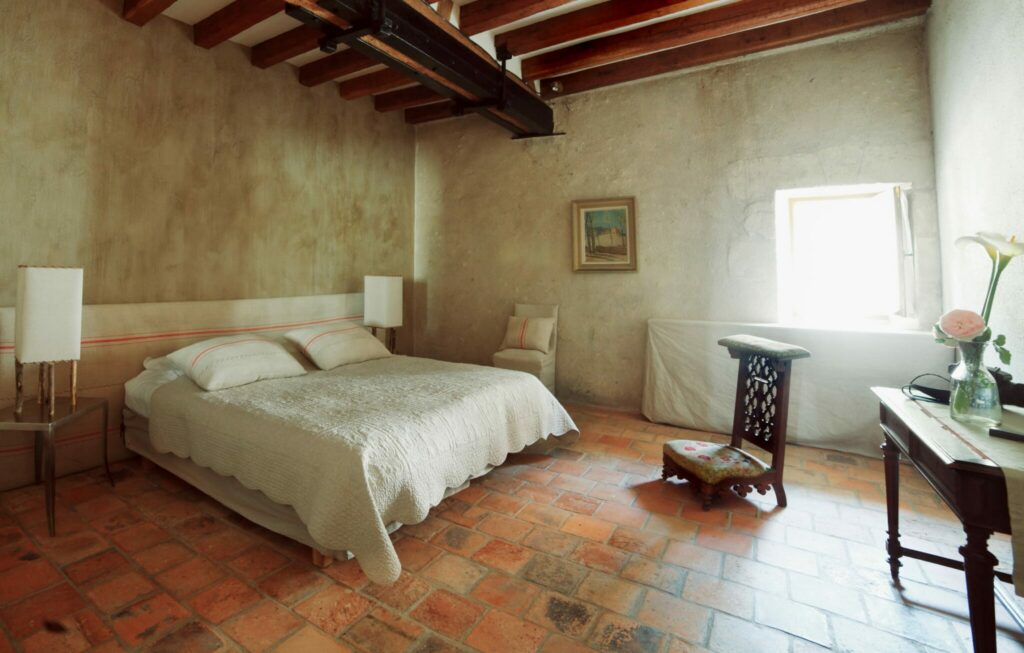
Here, the eye reaches towards the moat, the meadows and the horizon, in a more open part of the château where the different passages naturally meet. A slight raised level distinguishes the sleeping area and changes the way the room opens towards the outside and the evening light. Elsewhere, the relationship changes: closer to the church and garden in the Cardinal Room, or more directly turned towards the moat and sunset in the Pastoral Room.
Choosing the Monial Room means inhabiting a room shaped by light and the horizon, in an open relationship between the spaces of the château and the landscape.

 Français