


Alcohol abuse is dangerous for your health. Please drink responsibly. Sale of alcohol to persons under 18 is prohibited.
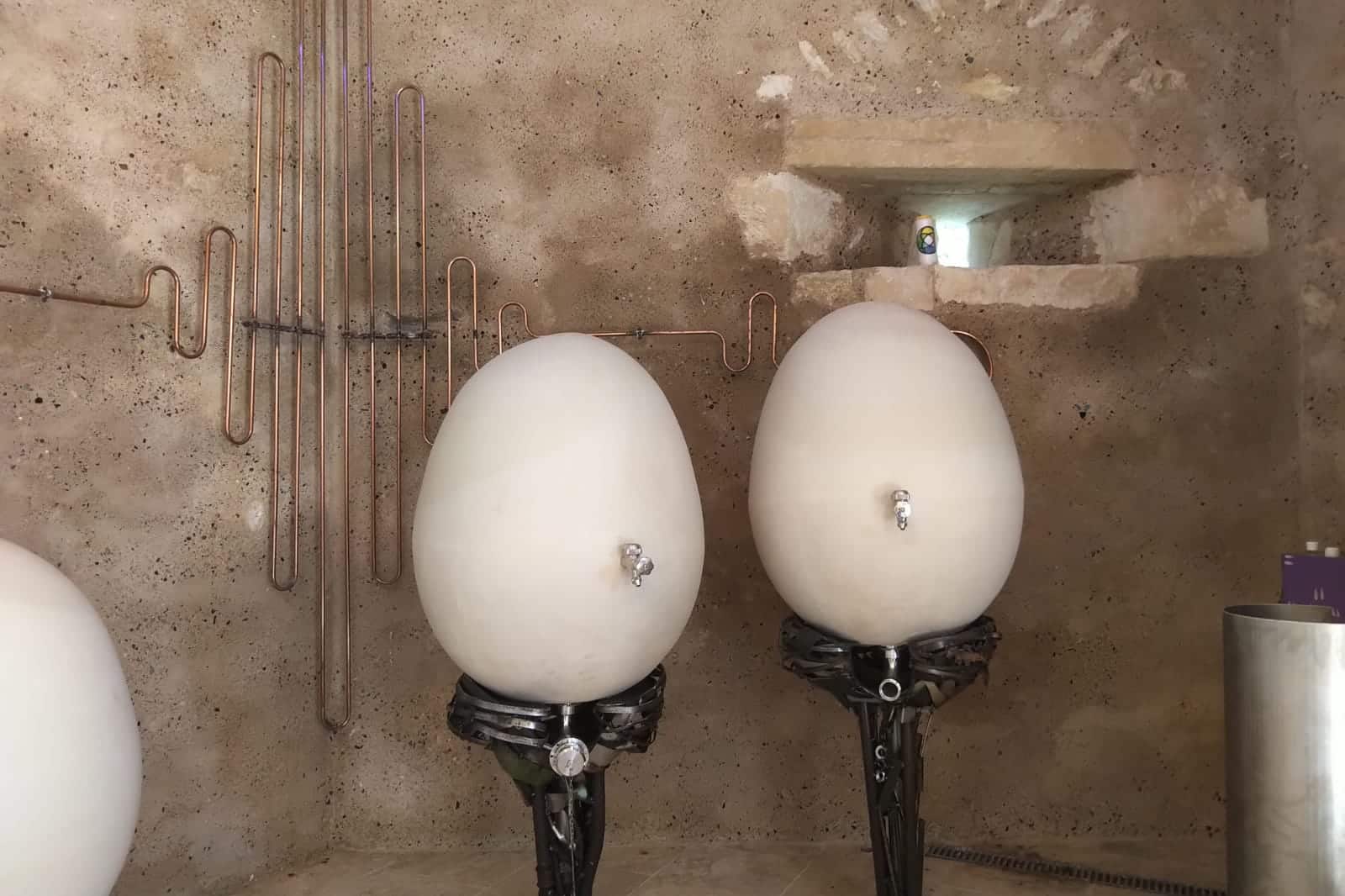
Élixir4 Distillery at the Château-monastery of La Corroirie
In the former outbuildings of the Château-monastery of La Corroirie, between Loches and Montrésor, the Élixir4 distillery continues the life of the place in another form. Plants, scents and transformations are approached in direct relation to the estate, the seasons and the time each experiment requires.
The distillery does not attempt to recreate the former practices of the Carthusians of Le Liget. It continues, with different gestures, a much older relationship between a place, its plants and the transformation of natural materials.
Angelica, rose, honey and other botanicals enter a process built through variations: harvesting, macerating, distilling at low temperature, allowing time to rest, returning to a scent and adjusting an equilibrium. Élixir4♥ remains less a fixed recipe than an ongoing body of work.
A rose with its own history beside the church

Some of the plants worked with in the distillery first belong to the everyday history of La Corroirie. This rose is one of the most intimate examples.
Jeff de Mareuil propagated it from an old André Eve rose planted for Maine beside the church. Over the years it became a familiar presence within the estate before entering the distillery’s botanical research.
Its scent is particularly distinctive. It differs clearly from the profiles associated with Burgundy roses, Damask rose or the perfumery tradition of Grasse. What matters here is not an abstract idea of “rose”, but one particular plant, growing in one particular place.
How far the flower has opened, the hour at which it is picked and the time between harvesting and preparation already alter what can be perceived. The plant therefore brings its own rhythm into the work of the distillery.
A contemporary presence within an ancient place

The distillery belongs to the continuing life of La Corroirie, without turning the monument into a backdrop. It occupies the former service buildings at the entrance to the Monks’ Courtyard, within an ensemble where the church, gardens, moat and old buildings remain lived in and used.
Nothing has been reconstructed for effect. Distillation has simply found a place within this long history as a contemporary activity based on observing plants, transforming them and giving them the time needed to reveal what they can become.
The gestures are different from those of the Carthusians of Le Liget, yet a relationship remains between the place, its plants and what people make from them.
Angelica, a plant at home at La Corroirie
Angelica grows particularly well at La Corroirie. Its presence on the estate makes it possible to follow the plant over time, from its growth in the ground to the experiments carried out in the distillery.
A single plant offers several distinct materials. Root, stem, leaf, flower and seed do not carry the same scents or the same balance. Working with each of them means reconsidering maceration times, proportions and sometimes the way the plant is distilled.
The great umbels are only one visible moment in a much longer cycle. The plant is observed before it is transformed: maturity, scent, season and the part being harvested all matter as much as the process that follows.
This direct observation is central to Élixir4. The recipe does not always come before the plant; it can also emerge from what the plant actually gives in a particular year, season or harvest.

Harvesting and preparing the roses

Harvesting already belongs to the work of distillation. A rose picked in the morning, a flower that has opened a little further, or a few additional hours before preparation do not produce exactly the same material.
After picking comes the separation of the petals. They are removed by hand and prepared before maceration or distillation. By then, their scent has already begun to change.
Freshness, maturity and harvesting conditions matter as much as the stages that follow. Differences that are almost imperceptible in the garden can become much clearer once the plant material has been transformed.
Once the flowers have been prepared, the petals are gathered together before entering the distillery. The volume of fresh plant material gives a very tangible sense of the passage from a rose still growing on the bush to something ready for maceration or distillation.
The bucket of petals is therefore the immediate continuation of the previous gesture: the complete flower has become a prepared material, still fresh and still closely tied to the moment at which it was harvested.
This closeness between plant, hand and still places the research within the rhythm of the estate. Some trials can be repeated from one year to the next; others remain inseparable from a particular flowering or harvest.

Rose, angelica and honey in the distillery
Once harvested and prepared, the plants enter another kind of time. In the distillery, rose, angelica and honey sit beside one another as materials to observe, compare and bring into balance.
Each has a different presence. Rose carries a distinctive floral expression; angelica brings greater botanical depth; honey introduces another density and length.
Their meeting is not a simple addition of ingredients. Proportions, maceration times, distillation temperature and rest gradually shift the balance.
It is within this space, between fresh material and transformation, that Élixir4♥ gradually takes shape.

An attentive distillation
Once the plants have been harvested, prepared or placed in maceration, another period begins: transformation. At La Corroirie, distillation is carried out slowly and at low temperature, with particular attention to the most fragile aromatic expressions.
A small change in temperature, duration or the moment of the cut can shift the balance: one scent becomes more present, another appears, or something delicate disappears altogether.
The work does not end when the liquid leaves the still. It must rest. Then one returns to it, tastes again, compares it with earlier trials and sometimes reopens an equilibrium that had seemed settled.
Wheat, honey and plants are never considered in isolation. Each must retain its presence without erasing the others. Distillation becomes less a search for intensity than a work of precision and accord.
Hydrosols, another way of working with plants
The distillery does not work only with spirits. Hydrosols — or hydrolats — offer another way of approaching plants grown at La Corroirie or selected for their botanical and aromatic qualities.
During distillation, steam passes through the plant material and carries some of its aromatic compounds with it. After condensation, the water collected retains a lighter, more delicate expression that can differ markedly from the scent of the fresh plant.
Rose, angelica and other plants do not therefore tell quite the same story when freshly picked, macerated, incorporated into a spirit or distilled as a hydrosol.
These differences form part of the research carried out at La Corroirie. They make it possible to compare scents and to observe what distillation reveals, transforms or allows to disappear before returning to the plant with a different perception.
Here too, the result remains tied to season, harvesting time and the actual material placed in the still. A hydrosol keeps something of one plant at one particular moment on the estate.
Élixir4♥, a botanical vodka worked through variations
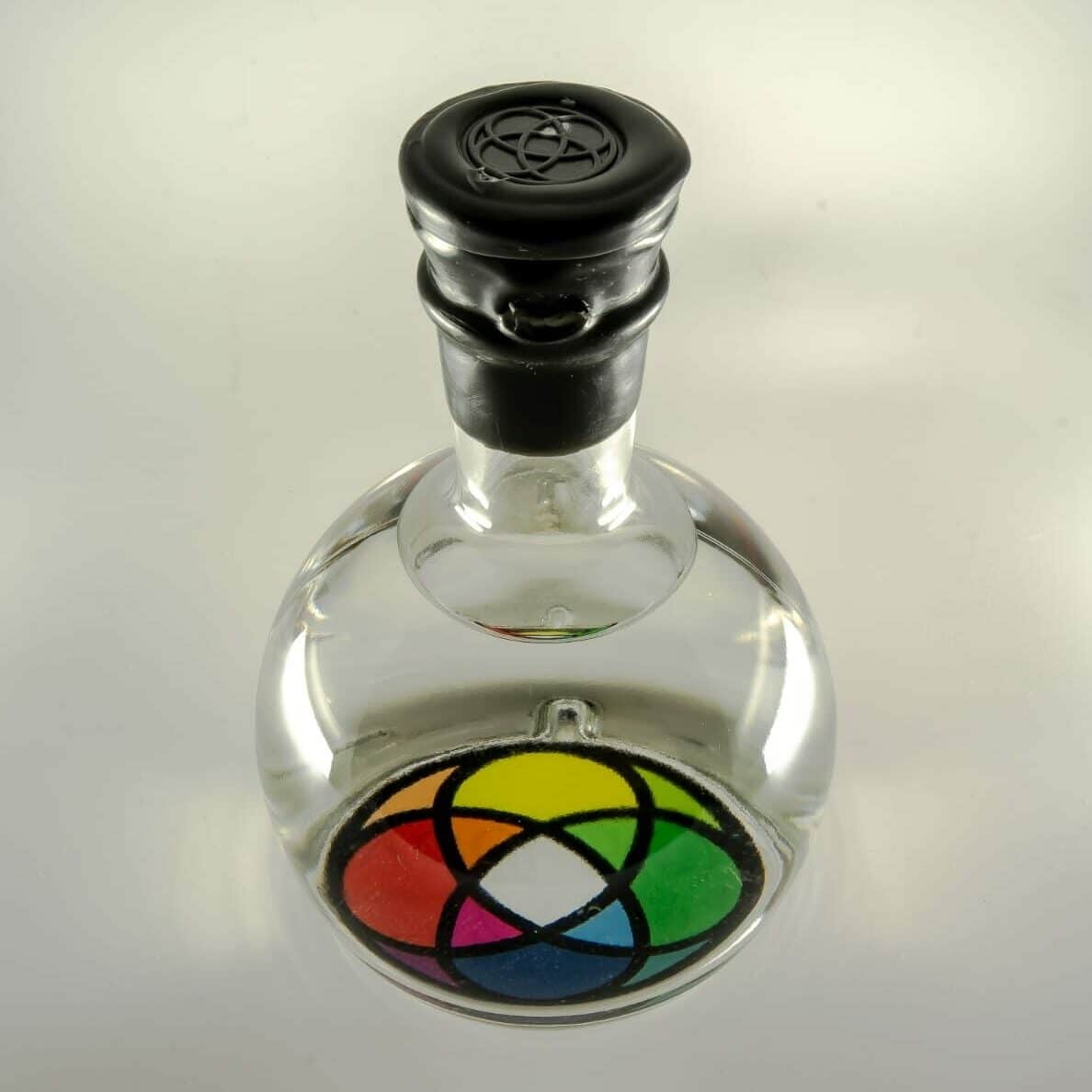

Élixir4♥ grew out of the research carried out at La Corroirie around plants, fragrance and distillation. The wheat base, honey and botanicals must find a common balance without one erasing the others.
Angelica and rose have a particular place in the work today. Their expression depends on the harvest, the maceration, the distillation and the time allowed for rest. The aim is not to eliminate every variation, but to recognise the balance that feels right.
Each bottle is numbered and therefore keeps the trace of one particular moment in the life of the distillery.
Hemp belonged to earlier compositions and experiments, but it is no longer part of the current composition of Élixir4♥.
Research that remains open
The distillery does not progress through a sequence of permanently fixed recipes. Some paths require several trials, several harvests or several seasons before they find their place.
A scent may seem balanced as it leaves the still and become too dominant after a few days of rest. A plant may reveal itself beautifully in a maceration and lose its finesse once distilled. The work then has to begin again: shifting an equilibrium, reducing a proportion or sometimes abandoning a path altogether.
This uncertainty belongs to the work at La Corroirie. Not every experiment is intended to become a product. Some simply help to understand a plant, a material or a process more clearly.
Bottles, hydrosols and trials therefore retain the traces of precise moments: a harvest, a distillation, a cut, a period of rest and sometimes an equilibrium that will never return in exactly the same way.

Entering the distillery
The distillery is not open continuously. It can be discovered at particular moments, when the work in progress and the life of the place make it possible, during certain events, accompanied visits or shared moments at La Corroirie.
Announced dates appear in the La Corroirie agenda. These moments offer another way into the place: seeing the plant materials, understanding current experiments, smelling the botanicals and encountering the distillery while work is actually taking place.
During a stay of several days at La Corroirie, the distillery can become one of the dimensions of the estate discovered gradually, alongside the church, moat, gardens and forest.
The distillery can also become part of a longer exploration of La Corroirie, together with its historic buildings, landscape and contemporary artistic presence.
This is not a permanent visitor route or a standardised tour. The distillery remains a working place, encountered when there is something real to share about what is being done there.
Questions about the Élixir4 distillery
What is Élixir4♥?
Élixir4♥ is a botanical vodka distilled at La Corroirie. It grows out of research around angelica, rose, honey and other plant materials, worked through maceration, distillation and time allowed for rest.
Is hemp still part of Élixir4♥?
No. Hemp belonged to earlier research and compositions at the distillery, but it is no longer part of the current composition of Élixir4♥.
Can the distillery be visited?
The distillery is not open continuously. It can be discovered during certain events or accompanied visits. Announced dates appear in the La Corroirie agenda.
Where is the Élixir4 distillery?
It is housed in the former outbuildings of the Château-monastery of La Corroirie, at the entrance to the Monks’ Courtyard, between Loches and Montrésor in Touraine.
Are the plants grown at La Corroirie?
Some plants are grown or propagated directly on the estate. Angelica grows particularly well here, while the rose used in the distillery was propagated by Jeff de Mareuil from an old André Eve rose planted beside the church. Other botanical materials are selected elsewhere when their origin or qualities are better suited to the work in progress.
Does the distillery also make hydrosols?
Yes. Hydrosols, also known as hydrolats, offer another way of working with and observing plants. The same botanical material does not express itself in quite the same way in a maceration, a spirit or a hydrosol, and these differences form part of the research carried out at La Corroirie.
Can Élixir4 be bought at La Corroirie?
Bottles may be available when the distillery is open or at certain moments during a stay. Current creations can also be found through the Élixir4 website.
Can a tasting be arranged?
A tasting can sometimes become part of a stay or a shared moment at La Corroirie. It depends on the moment and on the work taking place in the distillery rather than on a permanent programme.

 Français